
Last updated November 21, 2026
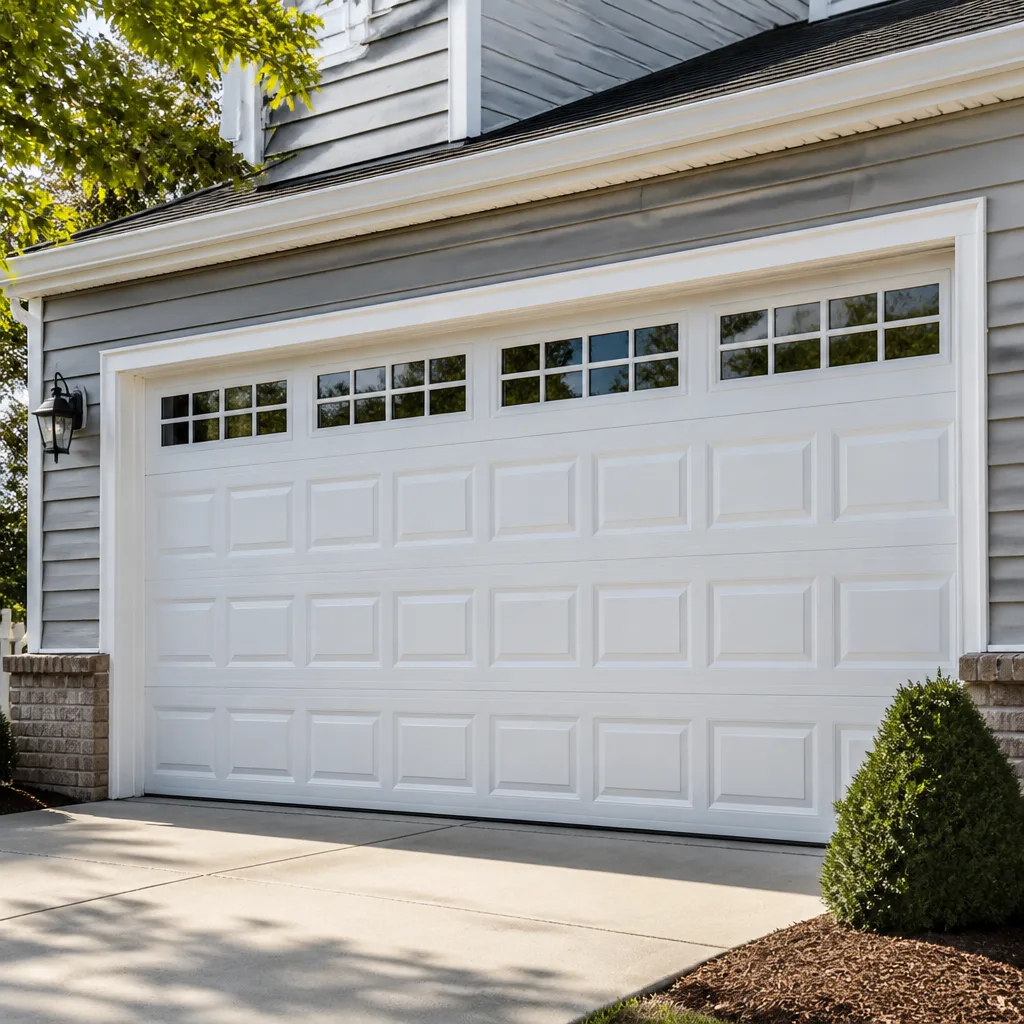 Raised-panel steel
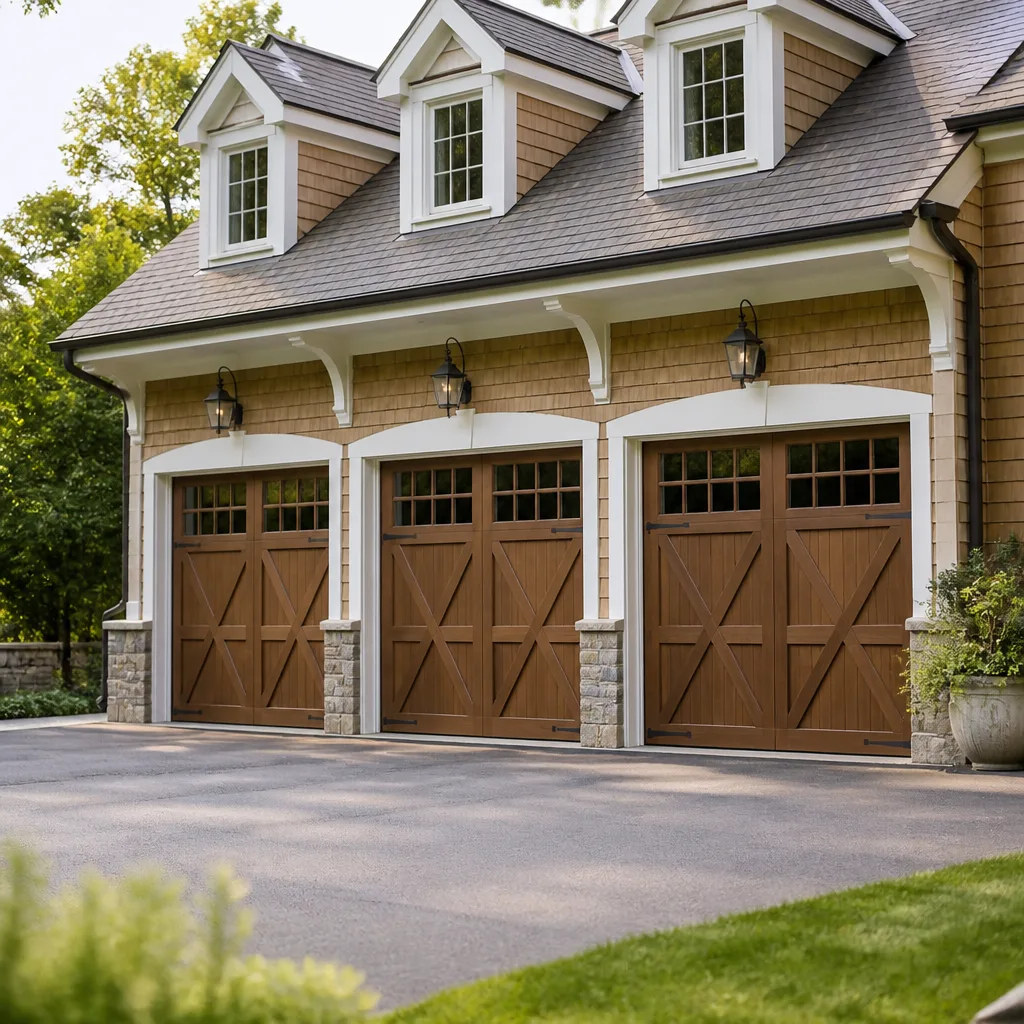 Carriage house
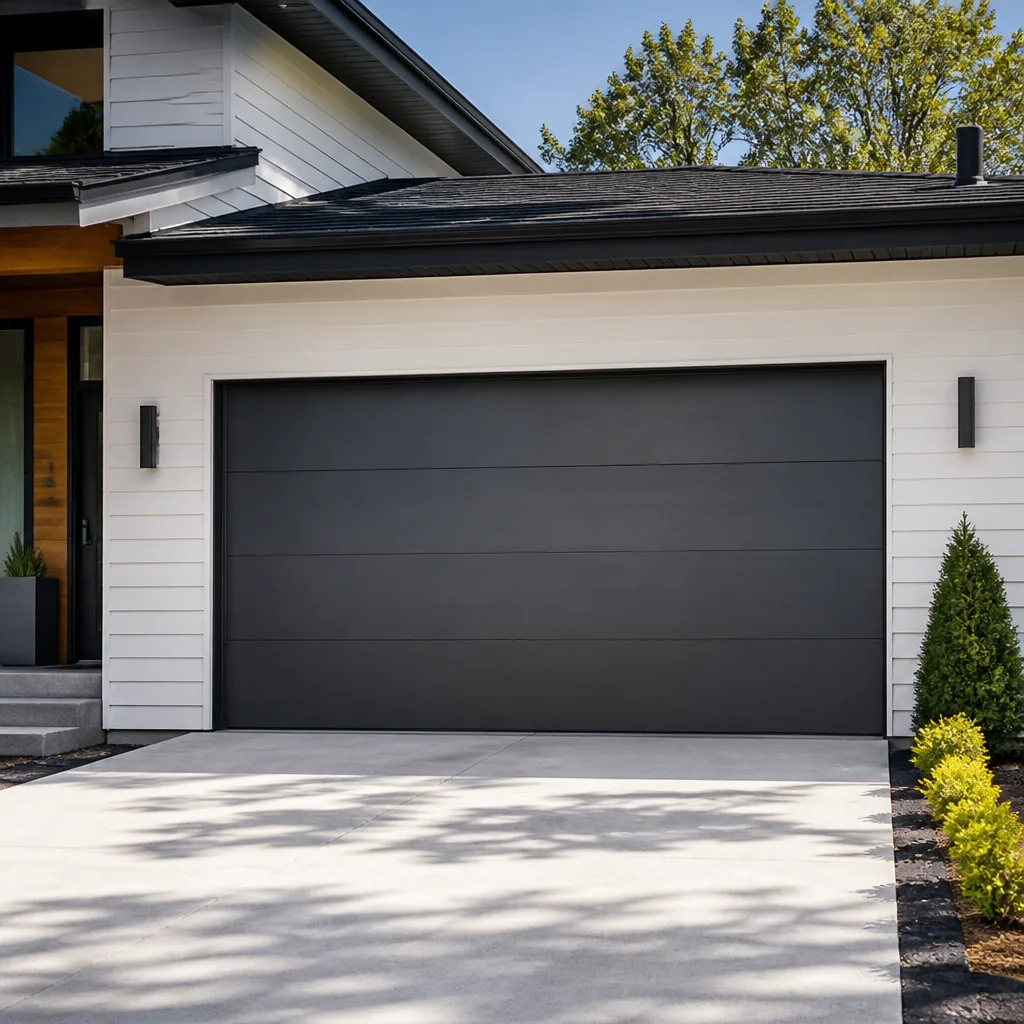 Modern flush
 Full-view glass
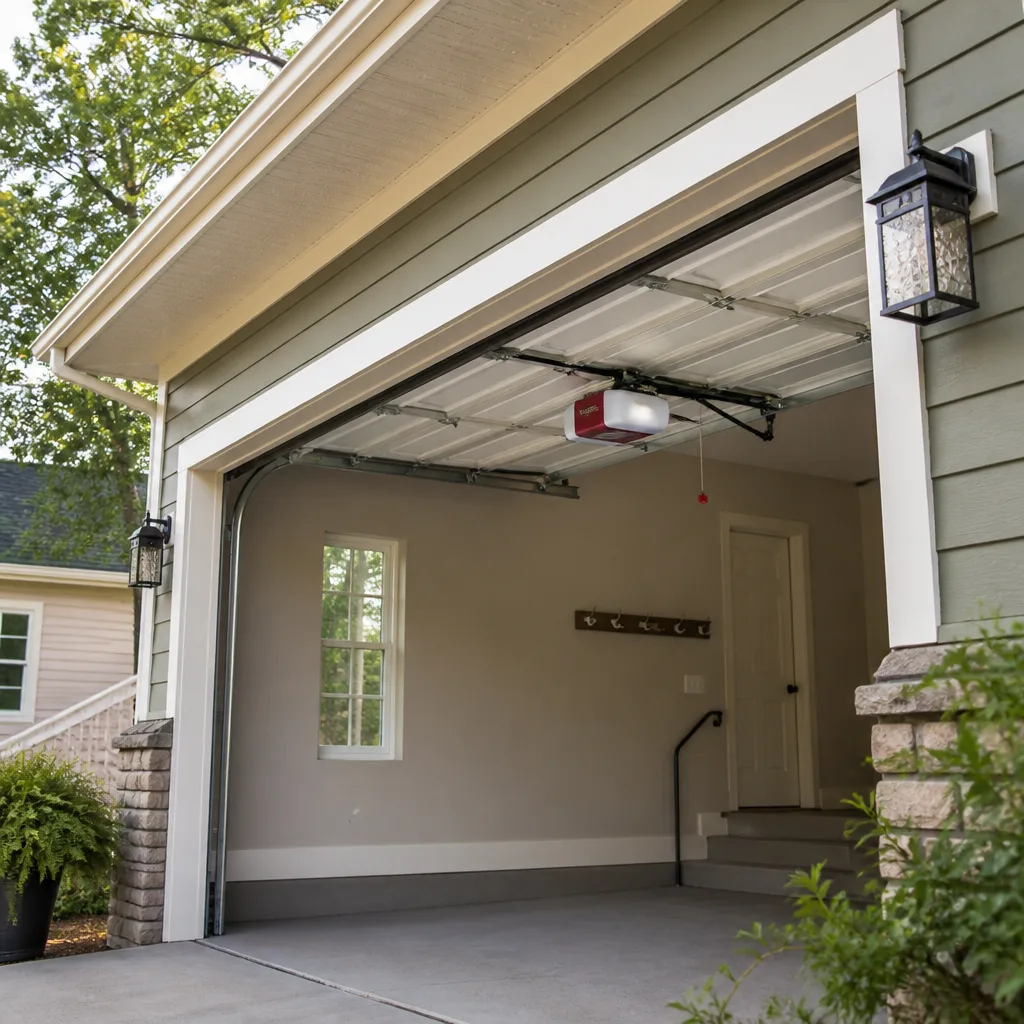 LiftMaster openers
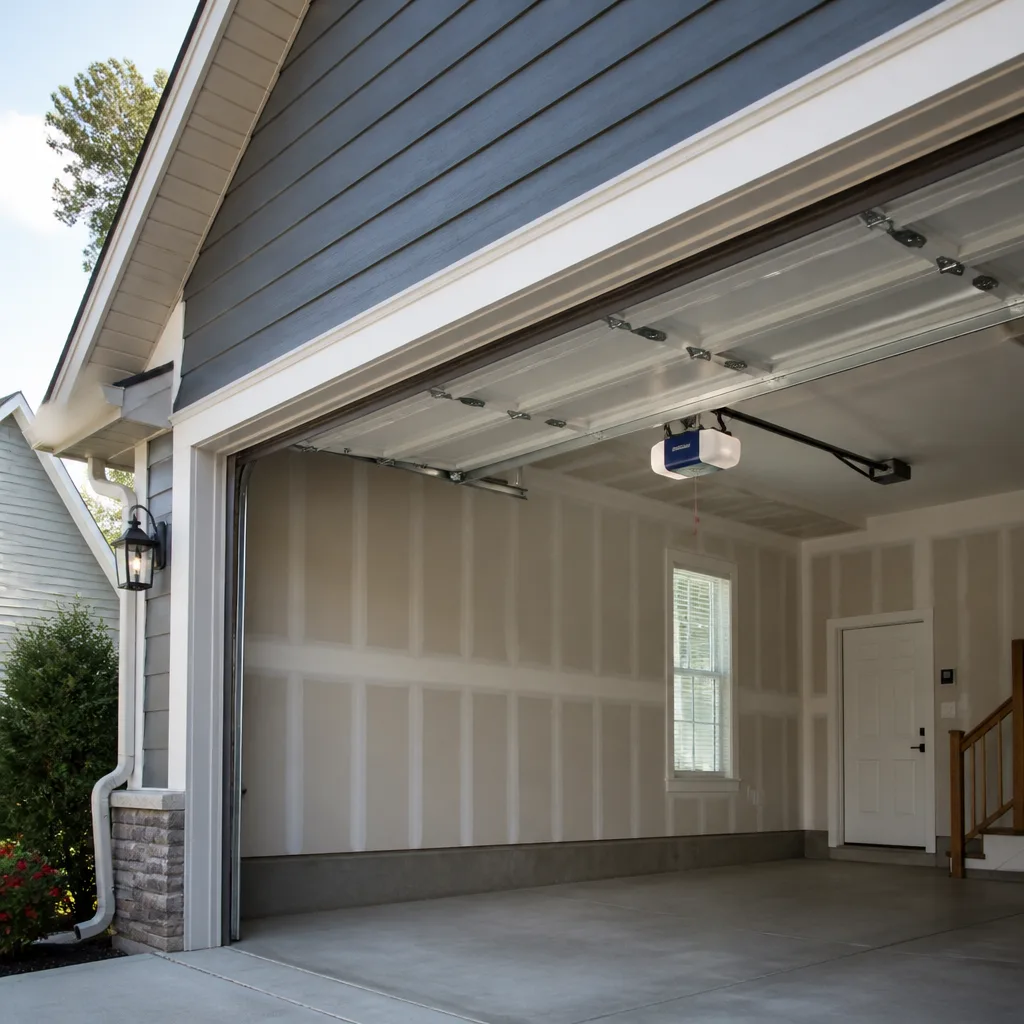 Chamberlain openers
Full 25-point door and opener safety check with every visit - springs, cables, rollers, tracks, and your LiftMaster or Chamberlain opener included
You get a price before we start. It does not change when the pro arrives.
Get your free estimateDIY vs Professional Garage Door: The Palm Beach Gardens Homeowner’s Decision Guide
Most homeowners frame the DIY-or-pro decision around skill. That’s the wrong variable. The real one in Palm Beach Gardens is legal exposure. You can physically swap out a garage door panel on a Sunday afternoon, but if that door doesn’t carry a valid Florida Product Approval number and the county ever inspects, you’re the one holding the code violation, not a contractor. The physics of high-tension springs add a second layer, and the humidity adds a third. This guide breaks the job down task by task: what’s genuinely safe to handle yourself, what Florida rules push into licensed territory, and where a free DIY attempt quietly becomes a repair bill you didn’t plan for. By the end you’ll know exactly which side of the line each job sits on.
Quick Answer
Aligning sensors, reprogramming a remote, and replacing weatherstripping are safe and legal for a homeowner in Palm Beach Gardens. Torsion spring replacement and full door installation are not: the springs store enough energy to kill someone regardless of your skill level, and a new door needs a permit with a licensed contractor of record plus a Florida Product Approval number. Everything else falls between those poles, which is what the rest of this guide unpacks.
Styles & brands we work with
- Raised-panel steel
- Carriage house
- Modern flush
- Full-view glass
- LiftMaster openers
- Chamberlain openers
Table of Contents
- Where Florida Law Draws the DIY Line
- Task-by-Task: What You Can Do vs. What Requires a License
- The Torsion Spring Line: Why Physics Overrides Skill
- Permits, Product Approval, and HOA Rules in Palm Beach Gardens
- The Hidden Cost of DIY Mistakes in South Florida Humidity
- How to Be a Smart DIY Homeowner
- Tracks, Rollers, and Other Middle-Ground Jobs
- Openers: When Reprogramming Isn’t Enough
Where Florida Law Draws the DIY Line
Florida doesn’t have a single statute titled “no homeowner shall touch a garage door.” The line is drawn by building codes, permit requirements, and product approval rules, and it depends on the nature of the work. Understanding that framework is the first step to deciding whether to pick up a wrench or a phone.
Here’s the practical version for Palm Beach Gardens homeowners:
- Cosmetic and adjustment work (sensor alignment, remote programming, weatherstripping, lubrication, track cleaning) is not regulated. You’re allowed to maintain your own property.
- A replacement door is a structural change to the building envelope. That means a permit, and permits generally require a licensed contractor of record. The door also must carry a Florida Product Approval number, the state’s system for verifying that a product meets wind and impact standards.
- Electrical work on the opener circuit, meaning anything at the panel or wiring a new opener to a hardwired circuit, falls under electrical code. Most cities require a licensed electrician or a licensed garage door contractor for that connection.
- Spring replacement isn’t typically a permit item, because the spring is a component rather than a structural change. The law doesn’t stop you. Physics does.
The Palm Beach Gardens wrinkle is wind. South Florida’s building codes are built around hurricane resilience, and garage doors are one of the weakest points on a home’s envelope during a wind event. That’s why the state cares so much about Product Approval on a new door. A door without that number isn’t just a paperwork problem; it’s an assumption that you’ve met a wind standard you haven’t.
Before any significant door work, call the City of Palm Beach Gardens building department and ask two questions: does this particular job need a permit, and what product documentation does the door need? The answer determines whether DIY is even on the table. It’s a five-minute call that saves a lot of regret.
For a deeper walkthrough of the repair side, our garage door repair page covers the range of problems we see across Palm Beach Gardens homes.
Task-by-Task: What You Can Do vs. What Requires a License
Let’s get specific. The table below sorts common garage door jobs into three buckets: safe to DIY, gray-area, and hire a licensed professional. When we say “safe,” we mean both physically safe and legally clean.
Safe for a Homeowner in Palm Beach Gardens
- Photo-eye (safety sensor) alignment. If the door reverses randomly or won’t close, the sensors likely slipped out of alignment. Straightening them so both LEDs glow steady is a five-minute job with no risk.
- Remote and keypad reprogramming. Lost a remote, bought a new one, or want to change your code? Follow the opener manufacturer’s instructions. Most Genie and LiftMaster models are straightforward.
- Weatherstripping replacement. The rubber seal along the bottom of the door wears out in Florida’s humidity. A new seal slides into the retainer and stops drafts and pests. No tools beyond a utility knife.
- Lubrication. A light application of proper garage door lubricant on hinges, rollers, and the torsion bar keeps things quiet and slows wear. Skip the WD-40; it attracts grit.
- Visual inspection. Look at cables for fraying, springs for gaps, and the door’s balance. Catching something early is worth more than any repair.
Gray Area (Use Judgment)
- Track adjustment. Slight realignment with a rubber mallet is doable. Heavy bending of a damaged track risks crimping it beyond repair.
- Roller replacement. Swapping a roller is simple in principle, but the door has to be supported safely, and the tension on the wrong component can bite.
- Opener motor replacement. If you’re comfortable with basic electrical connections and the circuit is already there, some homeowners manage this. If a new circuit is needed, call an electrician.
Requires a Licensed Professional
- Torsion spring replacement. The single most dangerous job on the door. Covered in its own section below.
- New door installation. Permit, Product Approval, wind-load compliance, and a licensed contractor of record. This one crosses into legal territory fast.
- Cable replacement. Cables carry the same stored tension as springs and can snap with lethal force. Never touch them.
- Panel replacement with structural impact. If the panel forms part of the wind-rated assembly, the replacement panel needs matching certification. That’s a documentation job, not just a bolt-on.
For a full look at the replacement side of things, see our Palm Beach Gardens garage door repair service overview, which covers both repair and installation.
The Torsion Spring Line: Why Physics Overrides Skill
The torsion spring is where the DIY versus professional question stops being a debate. A standard residential torsion spring holds hundreds of pounds of stored rotational energy. When it’s wound, that energy is waiting to release. When a spring breaks, it does so with a bang that can shake a house. When someone without the right winding bars loses their grip during a replacement, the bar or the spring can strike them, and the injuries from that are the kind we don’t need to describe in detail to make the point.
This is not a skill-tier question. A confident DIYer with years of home repair experience is still working around the same stored energy. There’s no “careful enough” that substitutes for the right winding bars, the proper technique, and someone who does this regularly. And there’s a subtler problem: spring replacements done wrong often look fine for weeks before the door drifts out of balance, strains the opener, and starts eating through other components.
What we do on a spring replacement:
- Identify the spring type, wire gauge, and inside diameter (there are dozens of combinations, and the wrong spring will run heavy or run stiff).
- Secure the door in the up position with the proper locking pliers and winding bars.
- Release the tension one quarter-turn at a time, counting carefully, so the energy never releases in a burst.
- Install the new spring, wind it to the manufacturer’s turns specification for the door’s weight, and test balance.
- Adjust the opener travel limits and force settings so the new spring operates correctly through the whole cycle.
Homeowners with a broken spring often ask whether they can just leave it and use the door manually. Push it up by hand, prop it, close it, lock it. That works for a day or two, but a door with a dead spring and a live opener is a bad combination. The opener will strain to lift a door it was never designed to lift without spring assist, and the gear or the rail can fail in short order. Better to call. For anything that can’t wait, our garage door spring repair page explains what a same-day broken-spring visit looks like in Palm Beach Gardens.
If you’re wondering whether your springs are near failure, the warning signs aren’t subtle. A visible gap in the spring, a door that feels unusually heavy when you lift it manually, or a loud bang from the garage are all signals that something has let go. Our technicians have up to 15 years of experience diagnosing exactly which component failed, so the first visit usually gets to the right answer.
Permits, Product Approval, and HOA Rules in Palm Beach Gardens
This is where DIY loses its footing most often. A homeowner can do a lot of repair work on a garage door in Palm Beach Gardens without asking anyone’s permission. Replacing the door is a different animal, and it comes with three overlapping sets of rules.
1. The City Permit
Replacing a garage door is treated as a construction project because the door is part of the building envelope. That means a permit in most cases. Permits typically require a licensed contractor of record, which eliminates DIY regardless of how capable you are. Ask the City of Palm Beach Gardens building department directly which permits apply to your job; the rules can shift based on whether you’re doing a door swap within the same opening or altering the opening itself.
2. Florida Product Approval
Every exterior door product installed in Florida needs to meet the state’s wind and impact standards, verified by a Florida Product Approval number. The number ties the specific product to a validated engineering report. If your door doesn’t carry one, or if it was installed without the corresponding documentation, you have an unpermitted and unverified installation. That’s your liability as a homeowner, not the installer’s, especially if you installed it yourself. A Clopay, Amarr, or Wayne Dalton door sourced from a reputable supplier will come with the right documentation; the trick is that the paperwork has to go with the permit, and the installer has to know how to file it.
3. HOA Rules
Many Palm Beach Gardens neighborhoods are governed by HOAs with style restrictions on door color, panel design, and material. Some require architectural review before installation. A homeowner can easily install a perfectly good door and find out weeks later it doesn’t match the approved palette for the community. Before you buy anything, get the architectural review approval in writing. When we install doors in Palm Beach Gardens, we routinely work with HOA architectural guidelines so the door that goes on is the door that stays on.
What to Ask Before Any Door Work
- Does this specific job require a permit from the City of Palm Beach Gardens?
- Does the new product carry a Florida Product Approval number that matches this installation?
- Does my HOA have an architectural review that needs to happen before I order?
- Will the permit require a licensed contractor of record, and if so, does that rule out DIY entirely?
If the answer to question four is yes, then the DIY window closes and stays closed. It’s better to know that before you’ve ordered a door.
The Hidden Cost of DIY Mistakes in South Florida Humidity
Here’s a pattern we see in Palm Beach Gardens more than homeowners expect: a small DIY fix that turns into a real repair because of the climate. The physics of the door doesn’t care that you meant well.
The most common example is a track knocked slightly out of alignment during a DIY spring job or roller swap. A misaligned door runs tighter on one side than the other. That side-to-side strain, working through the rollers and the tracks every time the door cycles, is harmless in a garage that sees two hundred cycles a year and much less harmless in one that sees a thousand. In humid climates like ours, the leading edge of a track that’s under uneven stress can start to warp within weeks, particularly when combined with the moisture that a Florida garage sees all summer. What started as a no-cost adjustment becomes a full track and roller replacement, which is a professional job that costs several hundred dollars by the time it’s done.
Other climate-specific traps:
- Weatherstripping installed incorrectly lets humid air in around the door edges. That humidity pushes into the garage, warps wood framing, and creates a surface for mold on the interior walls.
- Improperly lubricated rollers that skip because a homeowner used the wrong product (WD-40 is not a lubricant for a garage door) leads to roller wear and, eventually, track damage.
- Doors installed without proper wind-load anchoring have an obvious problem during a storm and a less obvious one the rest of the time: screws pulling loose from the jamb and enlarging the holes, which then requires a more involved reinstall.
The pattern is consistent. A DIY fix that saves a couple hundred dollars up front tends to cost a few hundred more within the year. Sometimes that’s still a fair trade if the job is truly small. It’s not a fair trade on springs, tracks, or doors, where the cost of failure lands on the structural components.
How to Be a Smart DIY Homeowner
The best DIY homeowners we work with in Palm Beach Gardens aren’t trying to avoid professionals. They’re trying to reduce how much professional work they need. That’s a goal worth supporting, because the maintenance tasks below are genuinely worth your time and genuinely reduce total repair costs over the years.
The DIY Maintenance Routine Worth Doing
- Monthly: test the safety reverse. Lay a 2×4 flat on the ground under the door and hit the close button. The door should reverse on contact. If it presses down on the board instead, the sensor or force setting needs attention.
- Monthly: check the photo-eye alignment. Both LEDs should glow steady, not flicker. Flickering means an obstruction or misalignment.
- Quarterly: lubricate hinges, rollers, and the torsion bar. Use a dedicated garage door lubricant, not WD-40. This one habit alone adds years to the moving parts.
- Quarterly: hand-balance test. Disconnect the opener, lift the door halfway, and let go. It should hold in place. A door that sinks or rises on its own has a spring or balance problem worth a professional look.
- Twice a year: inspect the weatherstripping and the bottom seal. Cracked or compressed seals should be replaced before humidity has a chance to work its way in.
- Annually: check the bolts and hinges for looseness. A quarter turn with the right wrench prevents rattles and prevents the door from working itself out of alignment.
- Annually: clean the photo-eye lenses. A dab of dust on a sensor lens can cause intermittent failures that look like something worse.
None of those require a permit, a license, or any particular skill beyond following directions. What they require is a habit. A homeowner who does the routine above typically calls us for one real repair every few years instead of three or four. That’s a meaningful savings.
What you shouldn’t try to DIY even under the umbrella of maintenance: winding or unwinding a spring, disconnecting a cable, or attempting a full opener replacement when the existing wiring is unsafe. Those are the boundaries. Everything else in the list above is fair game.
Tracks, Rollers, and Other Middle-Ground Jobs
The gray zone in Palm Beach Gardens is where homeowners get into the most trouble, because the job feels easier than it is. Track adjustment and roller replacement both sit here, and both can go sideways without warning.
A track that’s out of alignment needs to be brought back to true with controlled force. If you hit it hard enough to move it, you can also bend it. A bent track is worse than a misaligned one because the door’s rollers catch on the kink every cycle, accelerating wear on the rollers and eventually on the door panels themselves. If the door is binding, call a professional; it’s the kind of job that goes from a ten-minute adjustment to a full track replacement the moment a homeowner swings a mallet too hard.
Roller replacement is similarly deceptive. To swap a roller, the door has to be supported so it doesn’t drop or shift. Under-tensioned rollers can be removed safely; fully-tensioned ones under a live spring cannot. If you don’t know the state of the spring tension, don’t guess. The job is a good candidate for a professional call, because it’s quick, affordable, and closes off a whole family of downstream failures.
For an overview of how these jobs fit alongside the rest of the work we do, see our garage door opener repair page. Many of the calls we get about “the door won’t close right” turn out to be a combination of a roller issue and an opener force-setting issue, which is why the diagnosis matters more than the parts.
Openers: When Reprogramming Isn’t Enough
The good news about modern openers is that a lot of common problems are genuinely fixable by a homeowner. The bad news is that the ones that aren’t require a different kind of attention, and the symptoms often look similar.
What you can usually DIY on an opener:
- Reprogramming remotes and keypads. The manual (or the manufacturer’s app) walks you through it. A LiftMaster, Chamberlain, Genie, or Craftsman remote can almost always be added without a technician.
- Replacing remote batteries. Obvious, but it’s the culprit more often than anything else.
- Clearing and re-pairing a smart-home connection. Reconnecting the opener to a home hub is usually a settings job.
- Resetting a tripped breaker. If the opener has no power at all and the breaker flipped, that’s a homeowner fix.
What you should hand to a professional:
- Opener motor replacement or a full new opener install. The old opener has to come down safely, the new one has to be anchored properly, and the force and travel settings have to be tuned to the actual door weight. Getting those settings wrong can damage the door or create a safety hazard.
- Any wiring issue inside the opener or at the circuit. Electrical work is a licensed trade for a reason.
- Opener that runs but won’t lift the door. That’s usually a spring or balance problem masquerading as an opener problem, and the opener needs to be checked alongside the door itself.
Our team works on openers from the major smart-home brands, which means a Genie that won’t sync, a LiftMaster that’s lost its travel limits, or a Wayne Dalton door running on an older opener all get the right diagnosis on the first visit.
Common Mistakes to Avoid
- Attempting a torsion spring replacement without winding bars. There’s no safer home method. A screwdriver in place of a winding bar is a well-documented way to end up in the emergency room. Leave springs to a trained technician.
- Ordering a replacement door without checking Product Approval. A door without the Florida Product Approval number tied to the install is an unpermitted product. Before you buy, verify the number ships with the door and matches the install requirements.
- Skipping the permit because “it’s just a door.” In Palm Beach Gardens, a garage door replacement is a construction project that typically requires a permit and a licensed contractor of record. Saving the permit fee costs far more if you have to undo the install later.
- Using WD-40 on hinges and rollers. This is a solvent, not a lubricant. It strips the existing grease and lets grit in. Use dedicated garage door lubricant.
- Ignoring the warning signs until something fails. A door that’s started to slow down, run heavy, or make a new noise is telling you something. A cheap inspection now beats a full repair later.
- Installing a door without HOA architectural review. Many Palm Beach Gardens communities have style rules. Approval in writing before you order saves the cost of pulling a perfectly good door back off.
- Bending a track to “fix” a binding door. Salavageable adjustments become full track replacements when the bend is too aggressive. If the door is binding hard, call a professional.
- Replacing a panel on a wind-rated assembly without checking panel-level certification. The door assembly is rated as a system; a mismatched panel can void that rating.
See the difference
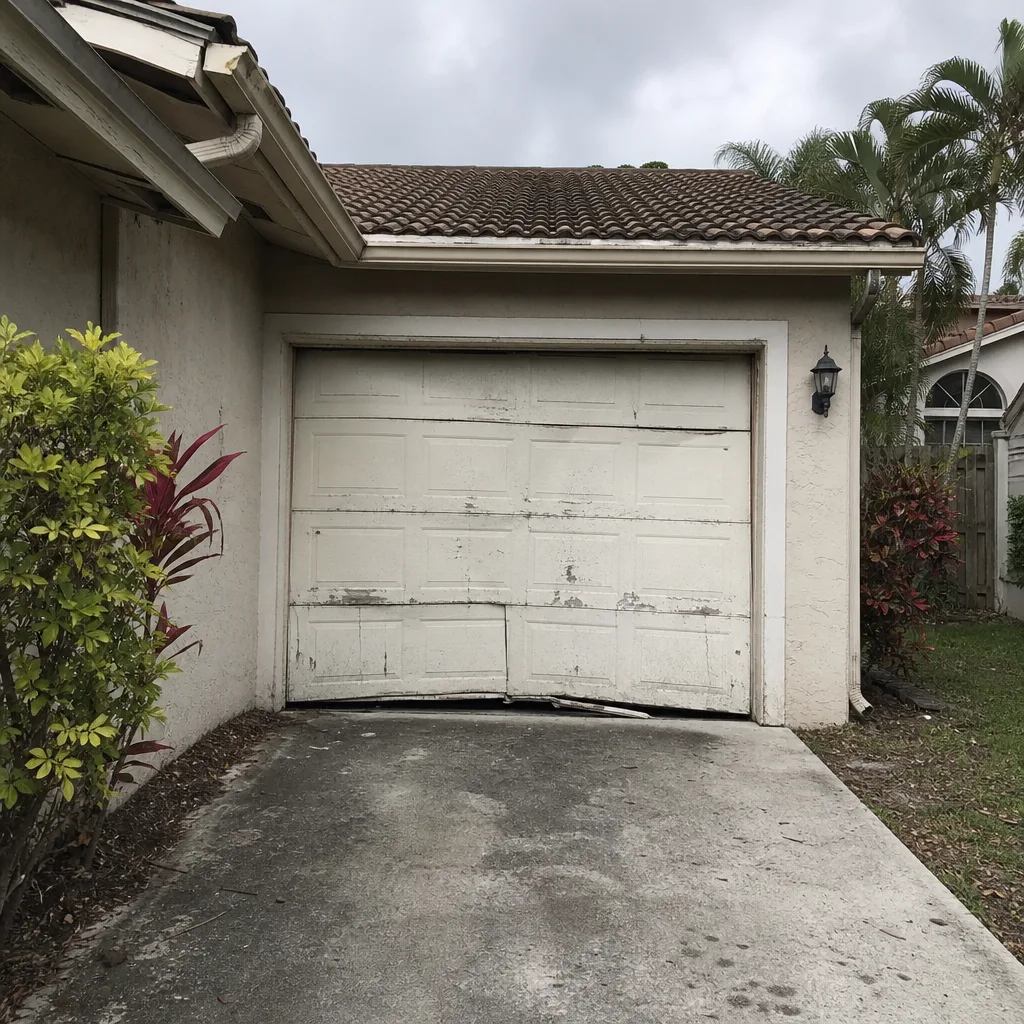 Before
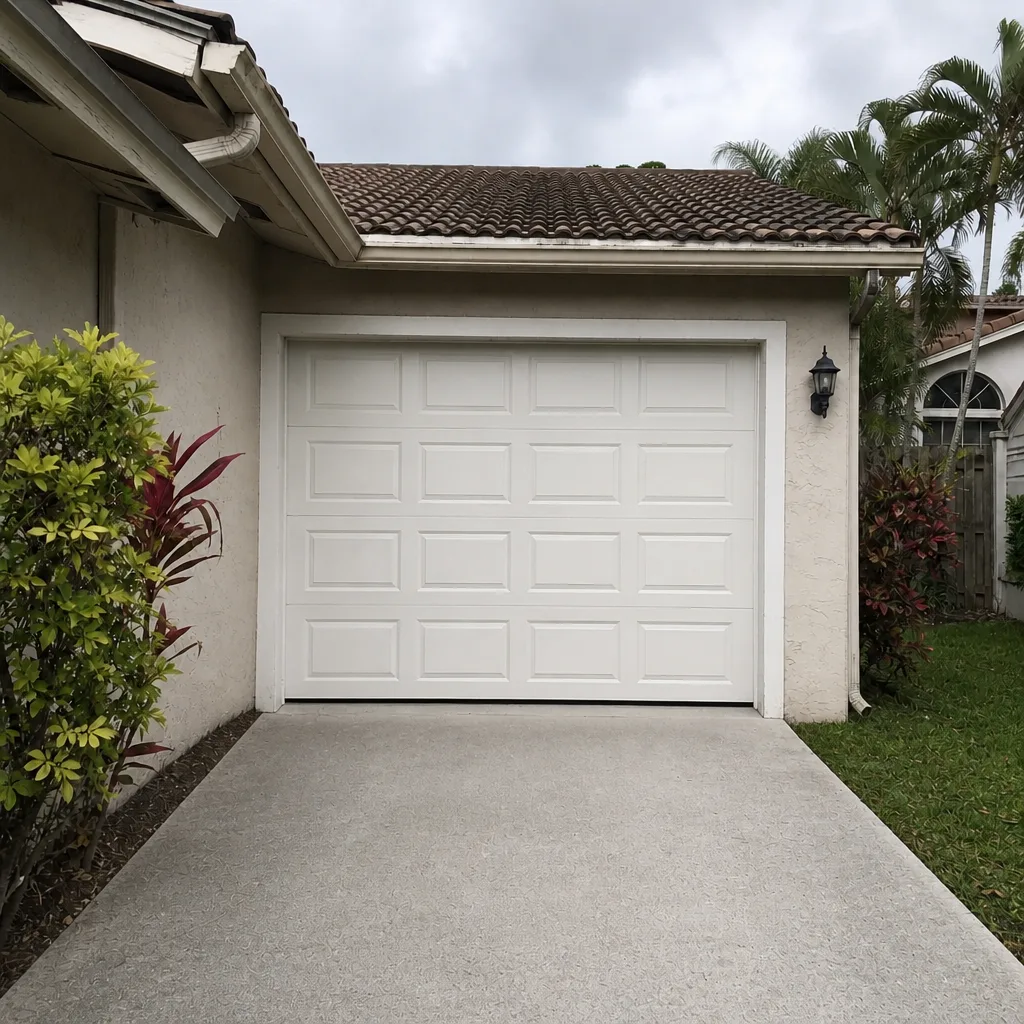 After
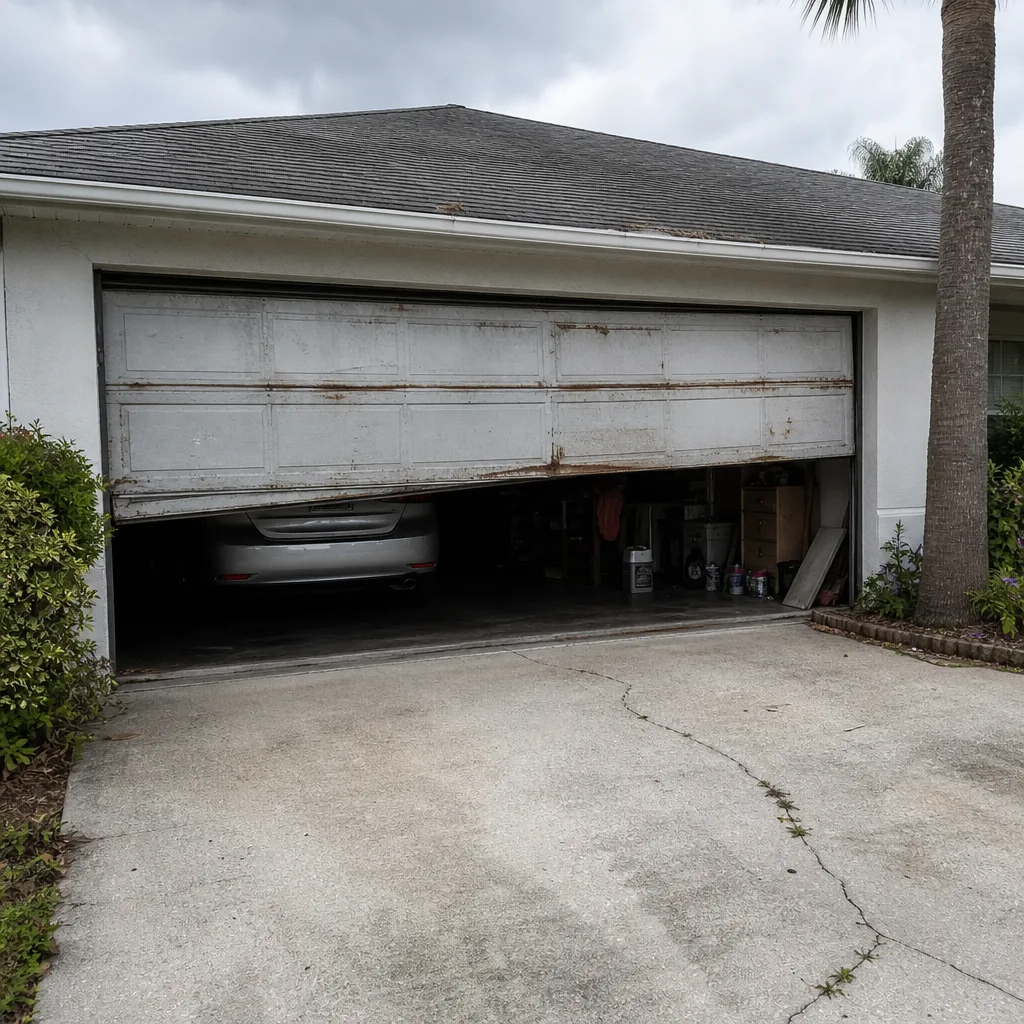 Before
 After
 Before
 After
When to Call a Professional
Some situations are clear. A broken torsion spring, a snapped cable, a door stuck open or closed, or any panel damage from a car or storm all warrant a call. So does a door that’s started to run heavy or won’t balance in the halfway position; that’s usually a spring at the end of its life, and the safe move is to have it diagnosed before it fails. If you’re considering a new door, and especially if you’re weighing a specific model from Clopay, Amarr, or Wayne Dalton, the permit and Product Approval questions need a professional answer before you buy. And if the power ever fails at the opener circuit, wire issues belong to a licensed technician.
Palm Beach Gardens Garage Door Repair offers free estimates in Palm Beach Gardens. We answer 24/7, and fast dispatch runs from 7am to 7pm. Call (855) 337-1107 to book a visit.
Frequently Asked Questions
You can physically replace panels on your own property, but if the door is part of a permitted wind-rated assembly, the replacement panel needs documentation that matches the original approval, and that’s usually handled through a licensed contractor. Before you order panels, call the City of Palm Beach Gardens building department and ask what the job requires. A quick conversation saves the cost of redoing the work. Call (855) 337-1107 if you’d like a free estimate on the repair instead.
There isn’t a Florida statute that specifically prohibits a homeowner from replacing their own torsion spring, so legally it’s a homeowner judgment call. The reason every professional advises against it is the stored energy in the wound spring, which can cause serious injury regardless of skill level. We treat spring work as one of the jobs that shouldn’t be DIY. Call (855) 337-1107 for a free estimate on a spring replacement in Palm Beach Gardens.
Most garage door replacements require a permit from the City of Palm Beach Gardens, because the door is part of the building envelope and must meet Florida wind standards. Permits typically require a licensed contractor of record, which rules out DIY on installation. Confirm the specifics with the city’s building department before you order anything. Call (855) 337-1107 to talk through your replacement project.
The cheapest fix is almost always the simplest: check the photo-eye sensors first, then the remote batteries, then the opener’s force and travel settings. If those are fine, the door may have a spring or balance issue that needs a professional diagnosis before parts are ordered. A free estimate from Palm Beach Gardens Garage Door Repair answers that question without a charge. Call (855) 337-1107.
Sometimes. Replacing an existing opener with a new one on the same wiring is within reach for a confident homeowner, but a new circuit or a re-wiring job requires a licensed electrician. The trickier part is tuning the travel and force settings to the door’s actual weight; get that wrong and the door suffers. Call (855) 337-1107 for a free estimate if you’d rather have us handle it.
The most common signs are a visible gap in the spring, a door that feels unusually heavy when you lift it manually, a door that won’t hold in the halfway position, or a loud bang from the garage. Any of those mean the spring is at the end of its life and should be diagnosed. Call (855) 337-1107. We answer 24/7, and same-day service is often available for a broken spring in Palm Beach Gardens.
The Bottom Line
DIY is a real option for the small jobs: sensor alignment, remote programming, weatherstripping, lubrication, and the monthly safety check. Those are the tasks that reduce your total professional bill over time. The line gets crossed at springs, cables, tracks that are binding hard, and any full door installation that requires a permit and a Florida Product Approval number. South Florida’s rules make that line sharper than in most places. If your project sits on the professional side, the right call is a company that already works on your brand. Palm Beach Gardens Garage Door Repair is certified to work on LiftMaster, Chamberlain, Genie, Clopay, Amarr, Wayne Dalton, Craftsman, and Raynor equipment, so the first visit usually delivers the diagnosis and the fix. Call (855) 337-1107 for a free estimate in Palm Beach Gardens. We answer 24/7, and fast dispatch runs from 7am to 7pm.
Written by the team at Palm Beach Gardens Garage Door Repair.