
Top Signs You Need Garage Door Service – Don’t Ignore These
Most garage door failures announce themselves well before anything snaps. The three signs that mean stop using the door today are a broken spring, a frayed or hanging cable, and a door that’s come off its track. Slower operation, grinding noises and uneven travel mean schedule service this week. Everything else you can monitor. The trouble is that homeowners tend to file all of it under “I’ll get to it,” and some of those warnings are on a countdown clock. A door that’s slightly slower than usual isn’t a quirk; it’s often a torsion spring that’s lost tension and is a short run of cycles from failing under load. If you’d rather not sort that out yourself, call (855) 337-1107 and we’ll take a look.
Which warning signs mean stop using the door right now?
Three symptoms are a hard stop. A broken torsion or extension spring, a cable that’s frayed or hanging loose, and a door that’s jumped its track all put stored mechanical energy or unbalanced weight where it doesn’t belong. A garage door is the heaviest moving object in most homes, and the springs and cables are what hold it in balance. When one of those lets go, the door can drop fast, twist the panels, or burn out the opener motor trying to lift a weight it was never meant to carry alone.
Here’s the part worth understanding: you can’t safely test a spring or cable by hand. Those components are under high tension, and the tools and technique to release and reset that tension are specific to the trade. We treat garage door spring repair as its own specialty for exactly this reason. If you see a gap in a coil, a cable with frayed strands, or a door hanging crooked and refusing to close flush, stop pressing the button and get it looked at.
- Broken spring: a loud snap, a visible gap in the coil, and a door that suddenly feels like lifting a truck.
- Frayed cable: loose strands, a cable off its drum, or slack where there should be tension.
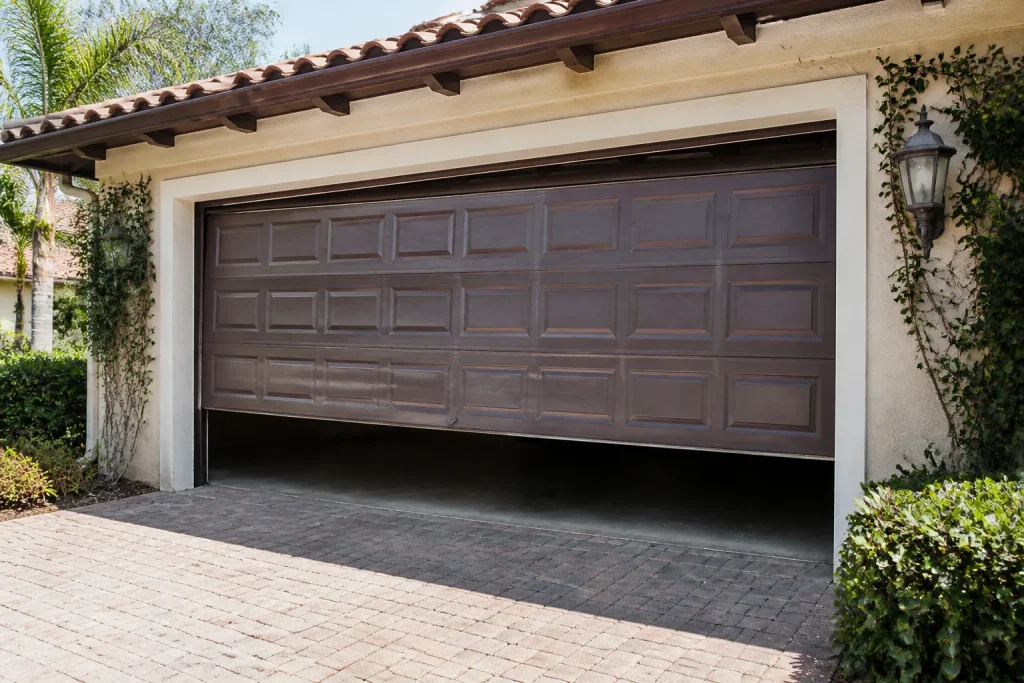
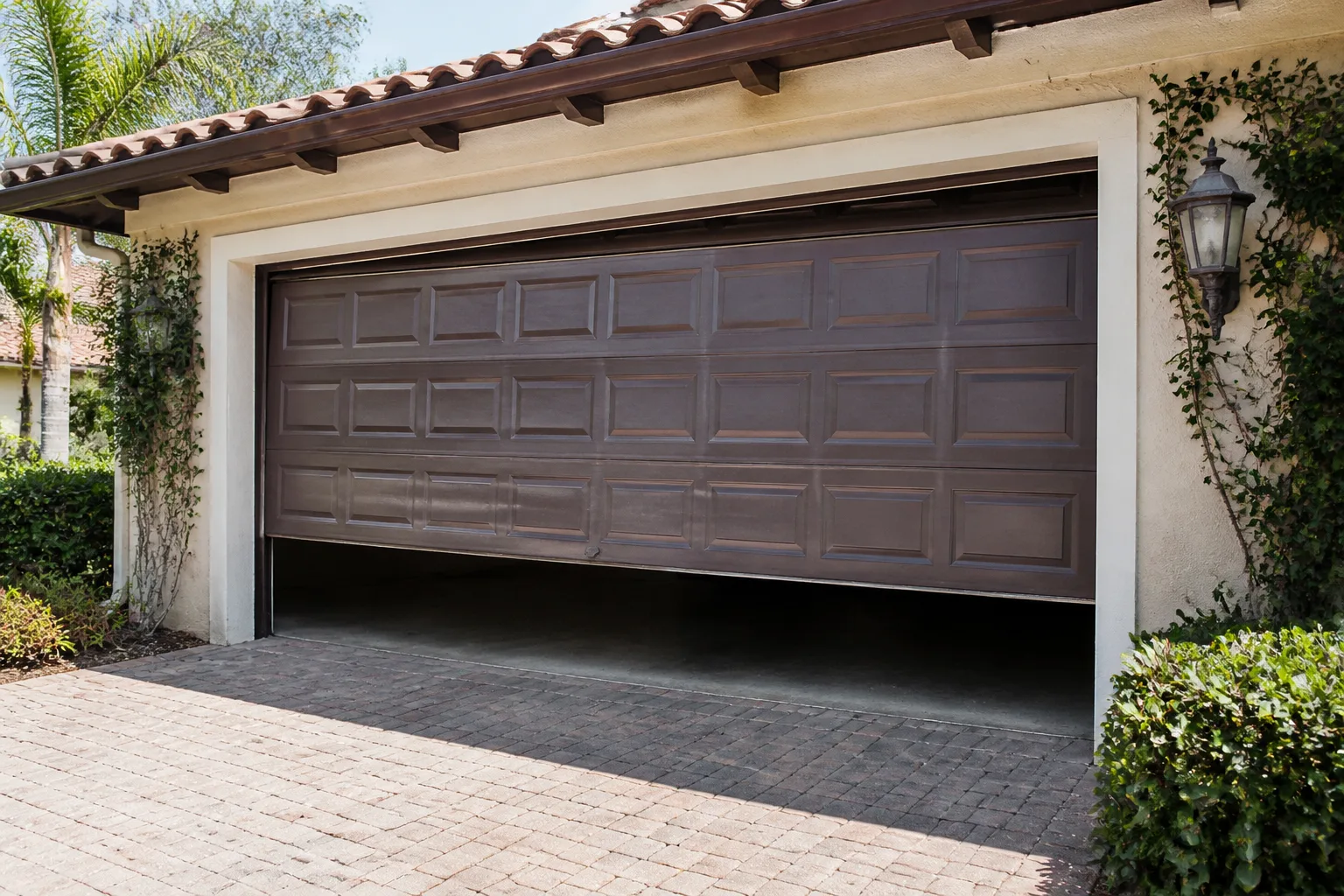
- Off-track door: rollers out of the channel, panels out of alignment, or a door that grinds to a stop partway down.
This is a stop-and-call situation, and it’s what emergency service is for. A broken spring or a door stuck open doesn’t wait for a scheduled appointment.
Why do small symptoms get worse faster in South Florida heat and humidity?
Heat and humidity accelerate wear on the moving parts that keep a door tracking straight. A track that’s slightly bent or a roller that’s stiff doesn’t stay “slightly” anything for long here. Metal expands and contracts with temperature swings, and a track that’s already under tension from a minor knock can pull the rollers out of alignment as the door heats up through the day. What starts as a small wobble becomes a fully derailed door, and then you’re looking at panel and track damage on top of the original fix.
Humidity works the other way, quietly. Rollers, hinges and the bottom brackets are the parts most exposed to damp air, and moisture is what drives corrosion on the steel. A rusty hinge or roller stops turning smoothly, which loads up the opener and the springs. Palm Beach Gardens garages sit in this climate year-round, so the parts that ride on metal-on-metal contact are the ones we check first on a service call. In our experience, catching a stiff roller or a slightly bent track early is the difference between a quick adjustment and a full track or panel replacement.
The fix here is inspection, not waiting. If you can see corrosion or hear a squeal on the tracks, that’s your cue to schedule service this week rather than monitor.
What opener sounds and behaviors actually mean the opener is failing?
Homeowners often blame the door for a problem that lives in the opener. A motor that strains, a delay between the button press and the door moving, and a remote that only works up close are opener symptoms, not door symptoms. That distinction matters because the repair is different. Diagnosing the wrong part wastes time and can leave the real problem to get worse.
Listen for the motor working harder than it should, a grinding or humming sound with no movement, or a door that starts up and then reverses on its own. Those point to opener strain, stripped gears or a failing logic board. Delayed response and shrinking remote range usually mean the receiver or the safety sensors, not a dying motor. Modern smart-home systems are worth flagging too: LiftMaster, Chamberlain, Genie and Craftsman openers are common in newer Palm Beach Gardens homes, and each has its own quirks for pairing, travel limits and sensor alignment, so garage door opener repair is a little different depending on what’s on your ceiling.
If the door itself moves fine by hand but the opener won’t lift it, you’re almost certainly looking at an opener problem, not a door problem.
How do you do a five-minute visual check of your own door?
You can inspect the parts that matter most in about five minutes, standing on the floor with the door closed. You’re looking for anything that’s changed shape, color or sound, not trying to fix anything. Here’s what to check and what each finding means.
- Springs: look at the coil above the door. A clean, unbroken coil is good. A visible gap or a spring that looks stretched thin means it’s lost tension. Don’t touch it, just note it.
- Cables: check both sides for frayed strands or a cable hanging loose off its drum. Fraying is a stop-and-call finding.
- Rollers and hinges: look for rust, cracks or rollers that sit crooked in the track. Some surface rust is normal; a cracked roller or a bent hinge is a this-week repair.
- Bottom seal: a worn or torn weatherstripping lets water and pests in and can throw the safety sensor alignment off. This is usually a monitor sign until it interferes with the door closing flush.
- The auto-reverse test: this is the one people skip. Put a roll of paper towels in the door’s path and close it. The door should reverse on contact with light resistance. If it presses down instead, your safety sensor or force setting has failed, and that’s a safety issue, not a cosmetic one.
A five-minute check catches most of what we’d flag on a first visit. You don’t need any special tools, just a flashlight and a willingness to look up.
When should you call a pro instead of waiting it out?
Call when the symptom involves springs, cables or the door’s balance, or when the auto-reverse fails. Those are the jobs where the risk is real and the tools are specialized. A trained technician can safely release tension, reset a cable, and confirm the door is balanced so the opener isn’t overloaded. Our technicians have up to 15 years of experience, and on a Palm Beach Gardens door the first job is a proper diagnosis: is this the spring, the cable, the track or the opener?
We handle the full spectrum from one place, so a worn Clopay or Amarr door and a tired Wayne Dalton opener don’t get passed between contractors. We work on the brand that’s installed, from older legacy systems to current smart-home openers. That means no runaround and no guesswork from someone learning your equipment on the job.
Related services in Palm Beach Gardens: if your check turns up a bent track, a worn roller or a full-door concern, our garage door repair handles adjustments and part replacements, and the Palm Beach Gardens Garage Door Repair page covers what we do across the board. For a door at the end of its life, a new installation lets you pick the fit for your home and timeline.
The price is quoted and agreed before any work starts, so there are no surprises once we’re on site.
The Bottom Line
Rank your warning signs before you act. Stop using the door for a broken spring, a frayed cable or an off-track door. Schedule service this week for slow or grinding operation, uneven movement and opener strain. Monitor monthly for minor weatherstripping wear and slow safety sensor response. Given how quickly heat and humidity turn a small track problem into a derailed door here in Palm Beach Gardens, the “monitor” tier deserves a real calendar reminder. If you’re in Palm Beach Gardens and need help, Palm Beach Gardens Garage Door Repair offers free estimates. Call (855) 337-1107. We answer 24/7, with fast dispatch from 7am to 7pm, Sunday through Friday.
Frequently Asked Questions
A broken spring usually announces itself with a loud snap and a door that suddenly feels impossibly heavy to lift by hand, often with a visible gap in the coil above the door. If you suspect a broken spring, stop using the door and call a professional rather than testing it yourself. Call (855) 337-1107 for a free estimate.
A slow door is not usually an emergency, but it’s a this-week issue, not a wait-and-see one. It’s often a sign the spring has lost tension or the opener is straining, and both get worse the longer you run the door. Call (855) 337-1107 and we’ll take a look.
If the door won’t reverse when it meets resistance, the safety sensor or force setting has failed, and you should stop using the door until it’s fixed. It’s a safety failure, not cosmetic, because a door that presses down instead of reversing can trap a person or pet. Call (855) 337-1107 for a free estimate.
If the door moves smoothly by hand and the opener is the only problem, repair the opener. If the door itself is warped, cracked or out of balance, replacement may be the better long-term call. We’ll give you a straight diagnosis first. Call (855) 337-1107 for a free estimate.
Written by the team at Palm Beach Gardens Garage Door Repair.
Need Garage Door Help?
Call Palm Beach Gardens Garage Door Repair - the local pro we connect you with is licensed and insured, here with fast help in Palm Beach Gardens.
(855) 337-1107