
Last updated November 21, 2026
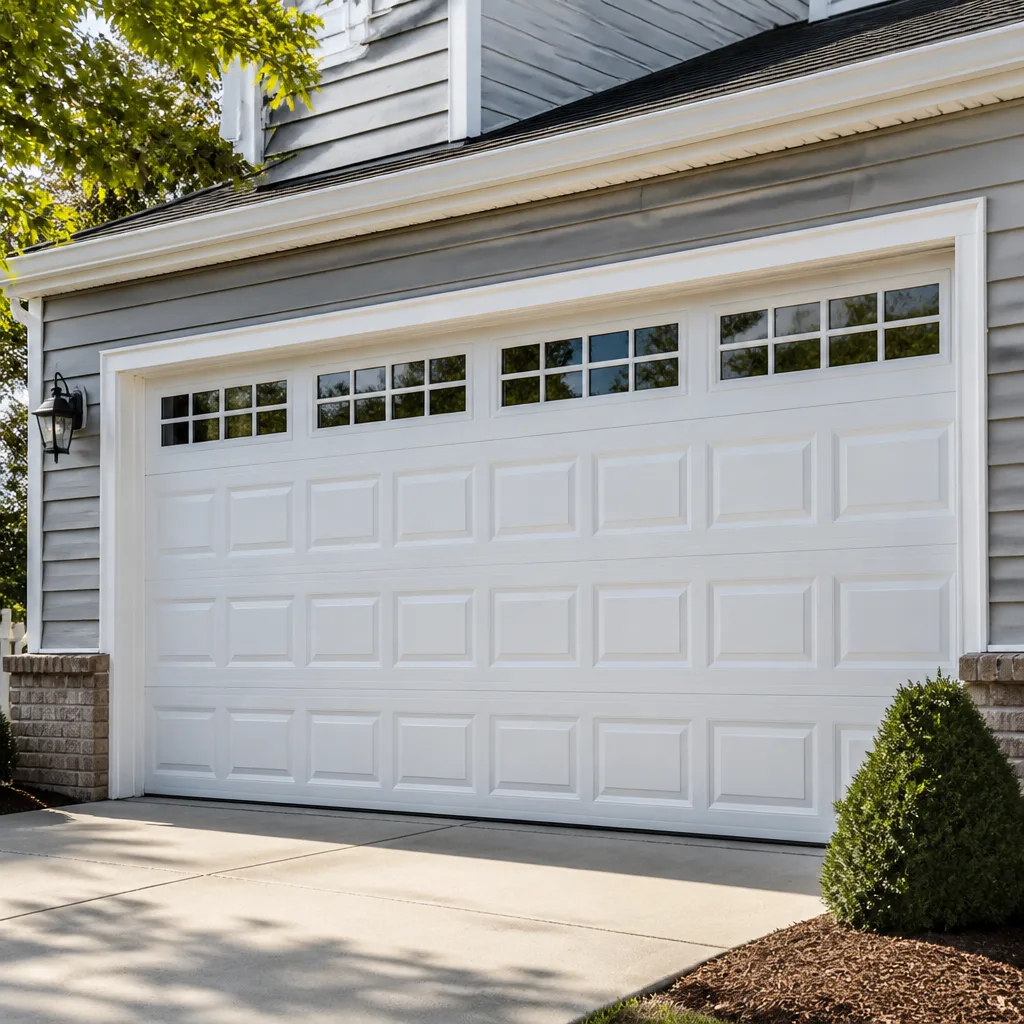 Raised-panel steel
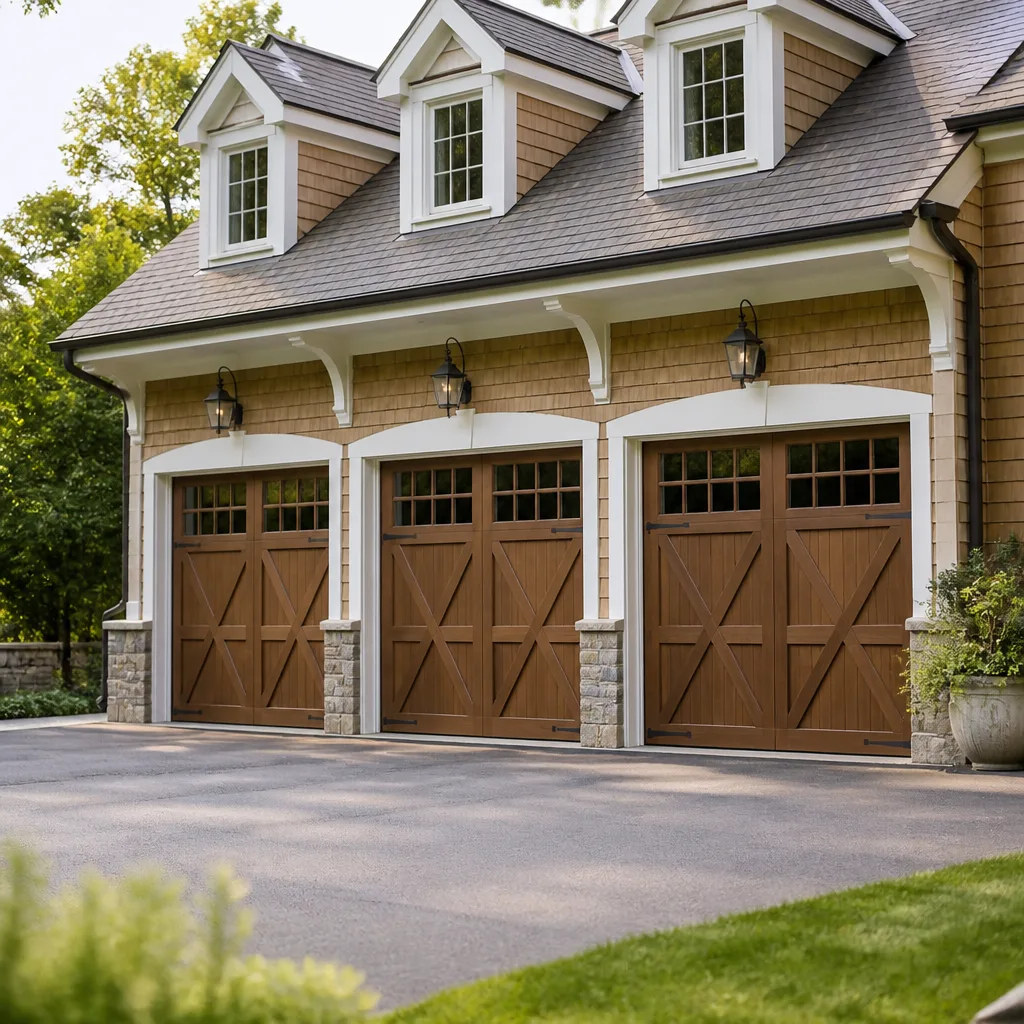 Carriage house
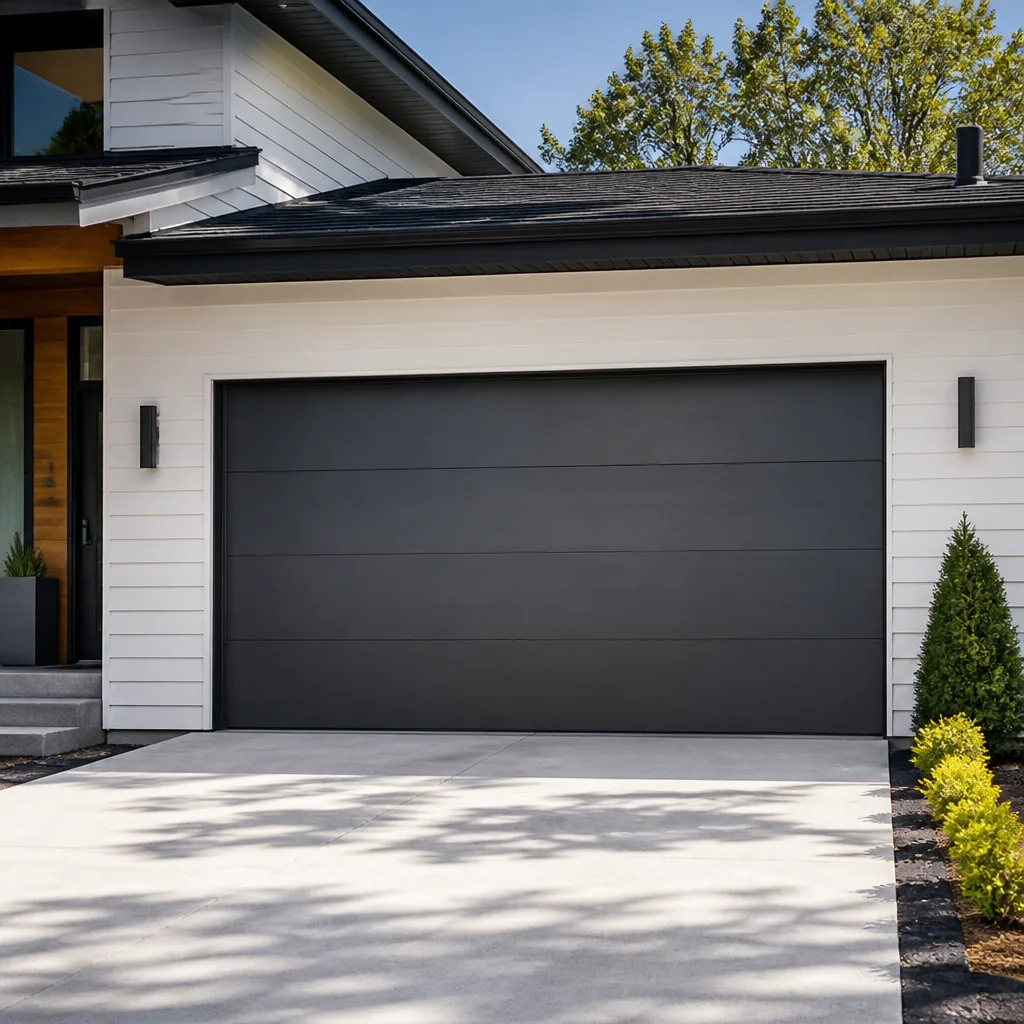 Modern flush
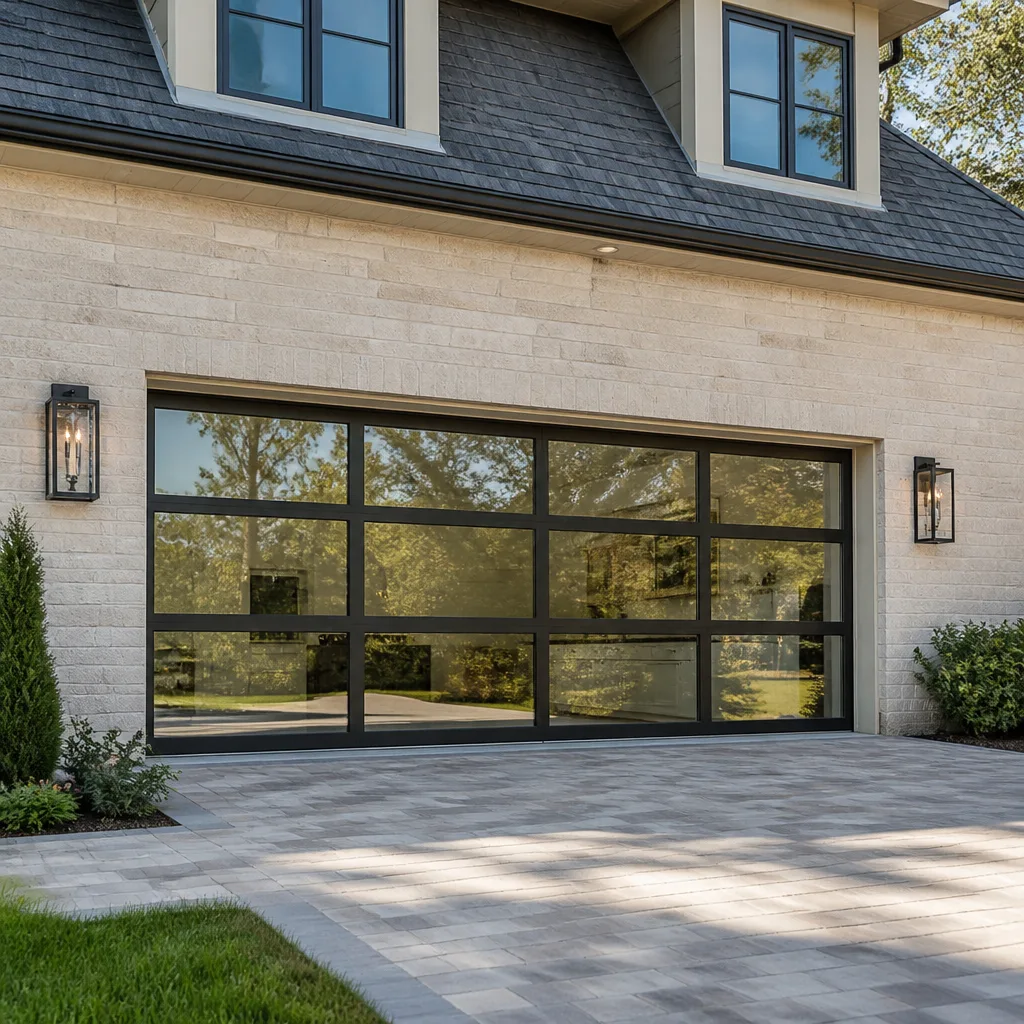 Full-view glass
 LiftMaster openers
 Chamberlain openers
Full 25-point door and opener safety check with every visit - springs, cables, rollers, tracks, and your LiftMaster or Chamberlain opener included
You get a price before we start. It does not change when the pro arrives.
Get your free estimateGarage Door Repair Maintenance Checklist for Palm Beach Gardens Homeowners
Most garage door maintenance checklists floating around online were written for a colder climate. They lead with greasing the torsion spring, warn about ice in the tracks, and treat lubrication as an afterthought. If you follow one of those lists in Palm Beach Gardens, you’ll spend time on parts that rarely fail here and skip the ones that quit first. The heat and humidity of South Florida punish rubber, grease, and hardware in a specific order, and a checklist needs to match that order. This guide sequences every maintenance task by what actually breaks first in Palm Beach Gardens, so you’re not over-servicing one part while another quietly gives out. You’ll get a season-by-season schedule, the test that catches spring wear early, and the prep work hurricane season demands that generic lists never mention.
Quick Answer
For a Palm Beach Gardens garage door, the highest-priority maintenance task is lubricating rollers, hinges, and the torsion spring with a synthetic lubricant rated for sustained high heat, done every four to six months rather than the yearly schedule most national checklists suggest. Next in line are weatherstripping inspection every six months (Florida UV degrades rubber faster than the one-year standard) and a monthly auto-reverse safety test. Cable tension, bottom-seal condition, and mounting-hardware torque belong on a pre-hurricane-season check each spring, since those are the failure points that matter most when a storm rolls through.
Styles & brands we work with
- Raised-panel steel
- Carriage house
- Modern flush
- Full-view glass
- LiftMaster openers
- Chamberlain openers
Table of Contents
- Why a Florida Garage Door Ages Differently
- Step 1: Lubrication on a Heat-Driven Schedule
- Step 2: Weatherstripping and UV Degradation
- Step 3: The Auto-Reverse Test That Catches Spring Wear
- Step 4: Pre-Hurricane-Season Hardware Check
- Step 5: Corrosion Checks on the Hardware That Fails First
- Step 6: Balance, Rollers, and Track Alignment
- Step 7: Opener and Smart-Home System Check
Why a Florida Garage Door Ages Differently
A garage door in Palm Beach Gardens lives a harder life than one in Minnesota, even though it never sees snow. The enemy here isn’t cold. It’s sustained heat, humidity, UV exposure, and the salt in the air that reaches inland neighborhoods across the region. Those four forces attack different components than winter does, and they attack them faster.
Heat is the big one. A garage in Palm Beach Gardens can sit well above 90°F for hours through the warmer months, and the metal of the door and tracks radiates that heat back into the enclosed space. Grease and lubricant thin out and burn off far quicker than they would in a cooler climate. Once the lubricant is gone, metal rubs on metal at every hinge and roller, and that’s where squeaks, sticking, and premature wear begin. Most people hear a squeal and think something is broken. Usually it just needs lubricant it lost months ago.
Humidity and salt push in a different direction. They go after the hardware: bolts, brackets, the ends of the torsion rod, the bottom brackets near the floor where moisture collects. Rust creeps in at those points and loosens the fittings that hold the whole system together. Rubber seals degrade on a third track entirely, cracking and shrinking under constant sun well before the calendar says they should.
This is why we sequence maintenance the way we do. Prioritize lubrication, then seals, then the hardware that corrosion attacks. Everything else follows.
Step 1: Lubrication on a Heat-Driven Schedule
Lubrication is the single most important maintenance task for a Palm Beach Gardens garage door, and it needs to happen roughly twice as often as the annual schedule most guides recommend. The reason is simple: heat breaks down lubricant. A grease that holds up for a year in a cool garage can thin and burn off in four to six months when the garage regularly exceeds 90°F. When that happens, every moving joint in the door starts wearing against itself.
The parts that need lubricant are the rollers, the hinges, the torsion spring (a light coat, never a heavy one), and the bearing plates at the ends of the torsion rod. Here’s the order we follow on a maintenance visit:
- Wipe down each roller, hinge, and bearing plate to remove old, gummy lubricant and any grit. Fresh lubricant over old grime just traps the grit in place.
- Apply a synthetic lubricant rated for high-temperature use. Lithium grease is common but thins too fast in South Florida heat; a synthetic spray or a heat-stable silicone-based product holds up longer.
- Lightly coat the torsion spring coils. A little goes a long way. Heavy grease on the spring collects dust and does more harm than good.
- Work the door up and down a few times by hand (with the opener disconnected) so the lubricant spreads into every joint.
- Wipe away any excess before it drips onto the door panels or the floor of the garage.
One caution: never lubricate the tracks themselves. People assume the door rides on the tracks and grease helps. It doesn’t. The rollers roll; they don’t slide. Grease in the tracks attracts grit and makes the door drag. Leave the tracks dry and clean them with a damp cloth instead.
If your door has a LiftMaster or Chamberlain opener, the rail and chain (or belt) may also need attention. Chain-drive units benefit from a light lubricant on the chain every few months. Belt drives usually need nothing. If you’re not sure which system you have, our garage door opener repair team can identify it on sight.
Step 2: Weatherstripping and UV Degradation
Weatherstripping in Palm Beach Gardens degrades faster than the standard one-year inspection advice assumes. The sun does the damage. Rubber and vinyl seals under constant UV exposure crack, harden, and shrink, and that process accelerates in full-sun conditions. Check your seals every six months, not once a year, and replace them at the first sign of hardening.
There are three seals to look at, and they fail at different rates:
- Bottom seal. The thick rubber strip along the bottom edge of the door. This one contacts the floor every cycle and takes the most abuse. A cracked or flattened bottom seal lets water, insects, and hot air through. In Palm Beach Gardens, where afternoon storms are part of summer, a failing bottom seal means standing water inside the garage.
- Perimeter seals (jambs and header). These run up the sides and across the top. They shrink in the heat and pull away from the frame. If you can see daylight through the gaps at the corners, they need replacing.
- Between-door seals (if you have a multi-panel wood or steel door with individual panel gaps). Less common but worth checking when the door is older.
When you do replace a seal, choose a material rated for UV exposure. A standard interior-grade seal will fail within a season or two in the Florida sun. Ask for a UV-resistant rubber or a heavy-duty vinyl. The cost difference is small and the lifespan difference is large.
While you’re at the bottom of the door, check the seal for gaps between it and the floor. A proper bottom seal makes contact all the way across. If you can slide a piece of paper under it in spots, the seal is either worn or the door’s travel limits need adjustment. Sometimes that bottom-seal gap is actually the first warning sign of a door that’s out of balance. If you see that, it’s time to look at the garage door spring repair side of things before the gap gets worse.
Step 3: The Auto-Reverse Test That Catches Spring Wear
Every garage door opener made for the US market since 1993 is required by federal law to have an auto-reverse function, and it needs to be tested monthly. That test does double duty in Palm Beach Gardens: it confirms the safety feature works and it gives you an early warning about a failing spring.
How to test auto-reverse sensitivity
Here’s the standard test, done safely. Never stand under the door or put your body in its path. Use a scrap piece of 2×4 laid flat on the floor instead.
- Open the door fully, then close it using the opener.
- As the door reaches the last foot of travel, place the 2×4 flat on the floor under it.
- The door should hit the board and immediately reverse to the open position. If it stops without reversing, or if it keeps pressing down, the opener’s sensitivity is set wrong, or the safety beam isn’t working.
- Test the photoelectric safety beam too. Wave a stick or place a box in front of the sensor lenses on either side of the door while the door is closing. The door should reverse instantly. If it doesn’t, the sensors need realigning or replacing.
Now the spring-early-warning part. If the door reverses on the 2×4 but it feels sluggish or heavy on the way down, that’s a door losing balance. It’s often a sign the torsion spring has fatigued or lost tension. A balanced door with a good spring should feel light and controlled in both directions. If yours suddenly feels heavier or the opener strains to lift it, the spring may be on its way out. That’s a job for a trained technician, because a torsion spring under load holds enormous tension and can cause serious injury if handled incorrectly. Never try to adjust or replace one yourself.
Our garage door repair team sees failed springs most often in doors that had been “feeling a little heavy” for weeks before they finally broke. Logging the auto-reverse test each month, even on a note taped to the wall, gives you the pattern to spot it early.
Step 4: Pre-Hurricane-Season Hardware Check
Hurricane season runs June through November every year, and the weeks before it starts are the right time for a hardware inspection. This is the step generic maintenance checklists skip entirely, and in Palm Beach Gardens it matters more than almost anything else on the list.
A garage door is a large, flat, moving panel. In high wind it’s one of the most vulnerable parts of a house. The hardware that holds it in place under normal conditions is the same hardware that has to hold under wind pressure. It only does that if it’s tight and in good condition.
Here’s what to check before each hurricane season:
- Cable tension. Both lift cables should feel taut with no slack. Frayed strands or uneven tension means the cable needs attention before the wind loads the door. Cables under tension can snap without warning, so if you see fraying, don’t handle them yourself.
- Bottom seal and floor contact. A door that seals tightly to the floor resists wind-driven rain and stops air infiltration. Replace a worn bottom seal before the season starts.
- Mounting hardware torque. Check every bolt and lag screw that fastens the tracks, brackets, and header to the framing. They loosen over time. Snug any that move, and replace any that are rusted or stripped.
- Track alignment. Both tracks should be straight and equally spaced. A bent or misaligned track means the door can jump out of the track during a wind event.
- Door panel condition. Look for cracks, loose panels, or failing hinges on wood and steel doors. A compromised panel is the weakest point in high wind.
If your door is an older model without a reinforced center stile or a horizontal bracing system, and you want to know whether it’s rated for storm conditions, that’s a conversation to have with a technician who can assess it in person. We handle full new-door installation too, and a properly rated door is the most reliable answer for a home that faces the season every year.
Step 5: Corrosion Checks on the Hardware That Fails First
Salt in the air reaches Palm Beach Gardens even several miles inland, and it goes after specific hardware locations first. Knowing where to look saves you from a snapped bolt at the worst moment.
The first points to check are the bottom bracket bolts, the ones that hold the bottom roller brackets to the door. They sit close to the floor, where moisture pools and where splash from rain and car washing reaches them. Rust forms on those bolts first, and a rusted or frozen bolt is a problem when the bracket eventually needs replacing or adjusting.
The second point is the ends of the torsion rod, where the rod meets the bearing plates and the center bracket. Corrosion there can freeze the bearing, which turns a simple lubrication job into a bearing replacement. Check for rust staining, feel for roughness when you turn the roller or the bearing by hand, and watch for any discoloration at the mounting points.
Other spots to check every six months:
- The hinge pins and the hinge plates themselves, particularly on steel doors where the metal can pit and rust at the edges.
- The lag screws that hold the header bracket and the track brackets to the framing.
- The bottom corners of the door panels, where water collects and rust often starts silently.
- The sensor brackets and the wiring runs near them.
When you find rust, a wire brush and a coat of rust-inhibiting primer will stop surface corrosion from spreading. But if the bolt or bracket is deeply pitted or compromised, replace it rather than paint over it. Tighten but don’t overtighten any hardware. Stripping a lag screw in the framing is a bigger repair than a loose bolt.
Step 6: Balance, Rollers, and Track Alignment
A properly balanced door feels light and controlled when moved by hand. Checking balance takes a couple of minutes and tells you a lot about the health of the whole system.
- Disconnect the opener (most openers have a red manual release cord you pull down).
- Raise the door about halfway and let it go. It should hold in place, not drift down.
- Raise it to about three-quarters open and lower it to about a quarter. In both positions, the door should stay roughly where you leave it.
- If the door drifts down on its own, springs have lost tension. If it drifts up, they’re too tight. Either way, don’t adjust the springs yourself: that’s spring repair work, and it needs a trained technician with the right tools.
While you have the door moving by hand, listen. Squeaks point to dry hinges and bearings. Grinding points to worn rollers. A rhythmic thump can mean a bent track or a warped panel. Rollers wear out gradually and start to flat-spot or develop bearing noise. When that happens, replacing all the rollers at once (not just the noisy one) usually makes more sense than chasing them one at a time.
Track alignment is worth checking from time to time too. Stand back and look down the length of both vertical tracks. They should be straight, parallel, and the same distance apart at top and bottom. Any bend is a problem the door will eventually make worse. A slight adjustment beats a panel that jumps the track.
Step 7: Opener and Smart-Home System Check
Opener maintenance is mostly about clearing out the things that interfere with the unit and testing the safety systems. A Palm Beach Gardens garage with a modern LiftMaster or Chamberlain opener, or a legacy Genie, has a few specific things worth checking every few months.
- Clean the safety beam lenses. The two sensors near the bottom of the door collect dust, insects, and spider webs. Wipe the lenses. If the opener’s indicator light flashes a code, check the manual for that code, since a false trigger is often just a dirty lens.
- Check the force setting. Most openers have a force adjustment. If you’ve had to set it higher to get the door to close, that’s a warning sign, not a fix. It usually means the door is binding or the spring has weakened.
- Test the manual release. The red release cord should disconnect the door from the opener easily, and the door should ride freely by hand afterward.
- Clear the travel path. Nothing stored under the door, nothing leaning against the tracks. The door needs a clean swing.
- Check the smart-home app and battery backup if equipped. If your opener has a battery backup (common on newer LiftMaster and Chamberlain models), test it periodically so you know it works when the power goes out during a storm.
If the opener is struggling to lift the door, or the wall button doesn’t respond, or the remote range has dropped noticeably, those are signs the unit itself needs attention. Our opener repair service covers all the major brands, so there’s no waiting on a referral if your system is a Genie, a Craftsman, or a smart-home model from LiftMaster or Chamberlain.
Common Mistakes to Avoid
- Following a national annual lubrication schedule. A yearly grease-up that works in a cool climate leaves a Palm Beach Gardens door running dry for months every summer. Lubricate every four to six months, and use a synthetic product that holds up to sustained heat.
- Greasing the tracks. The tracks are meant to stay clean and dry. Grease in the tracks traps grit and makes the door drag. Lubricate the rollers, not the rails.
- Ignoring weatherstripping until the rainy season. The rubber seals on a Palm Beach Gardens door degrade faster under UV light than the standard one-year check allows for. Inspect every six months, and replace them before summer storms find the gap.
- Skipping the monthly auto-reverse test. That test is a safety requirement, and it’s also one of the best early warnings of spring wear. Monthly testing catches a failing spring before it strands you.
- Adjusting torsion springs yourself. A spring under load stores enormous energy and can break violently. Never try to adjust or replace one. That’s a job for a trained technician with the right tools.
- Over-tightening hardware during hurricane prep. Snugging loose bolts is good; over-tightening strips the lag screws and leaves you worse off. Snug, don’t crank.
- Assuming a heavy door just needs a new opener. If the door feels heavy to lift by hand, the spring is the problem, not the opener. Replacing the opener to compensate for a weak spring puts more strain on the door and the hardware.
See the difference
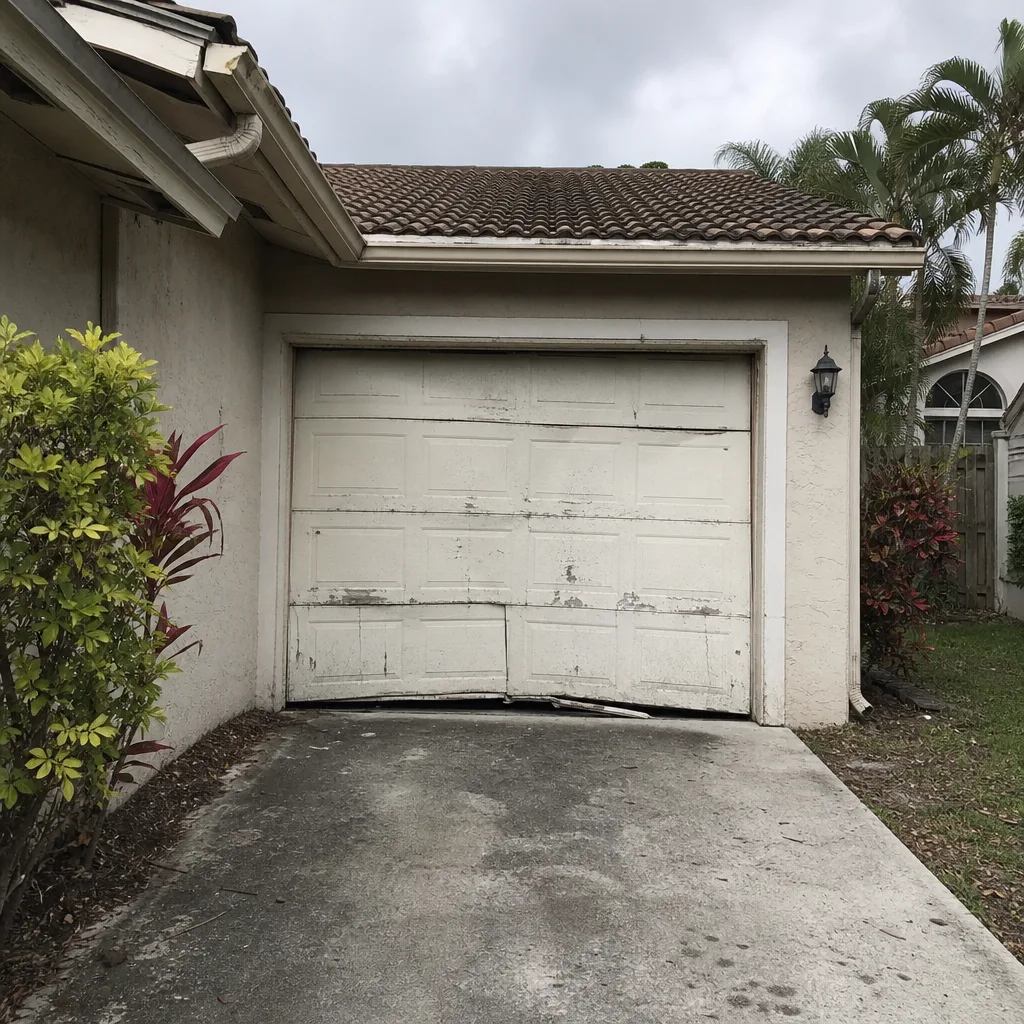 Before
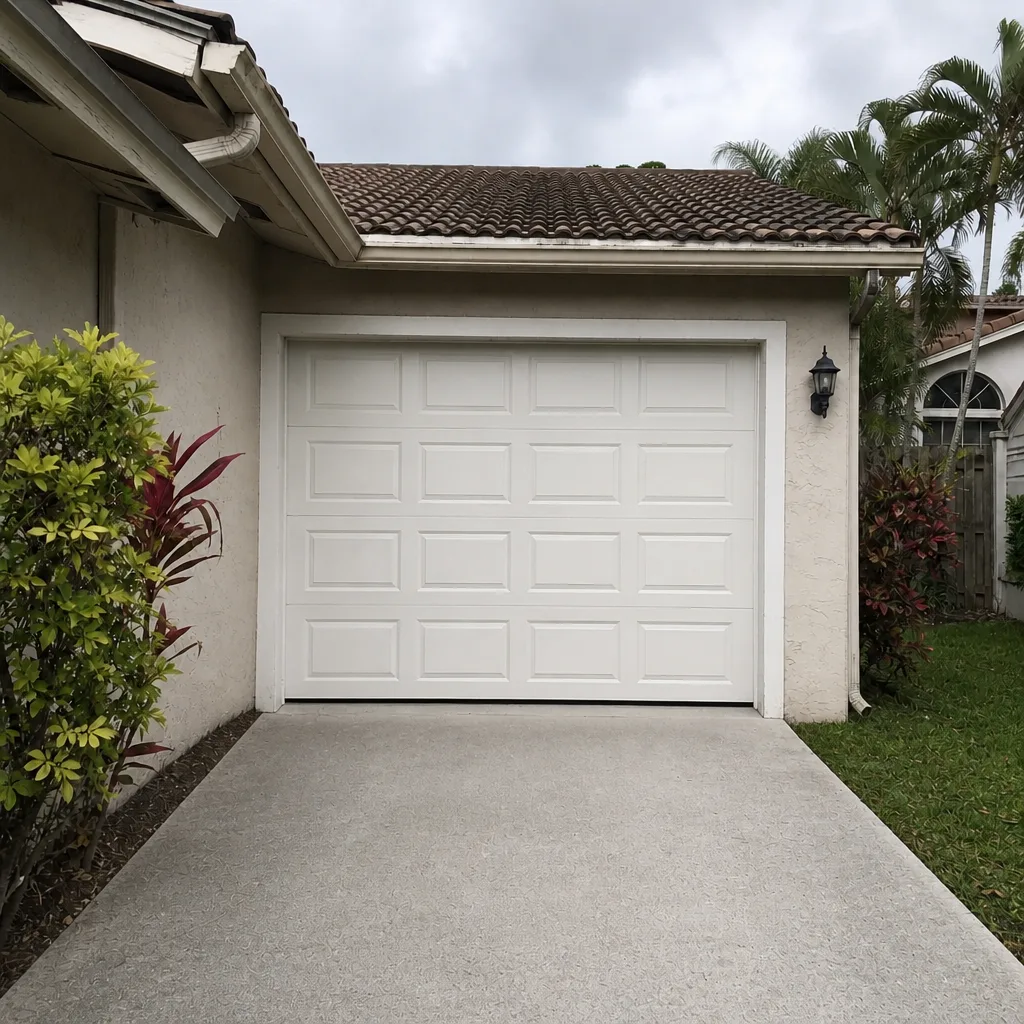 After
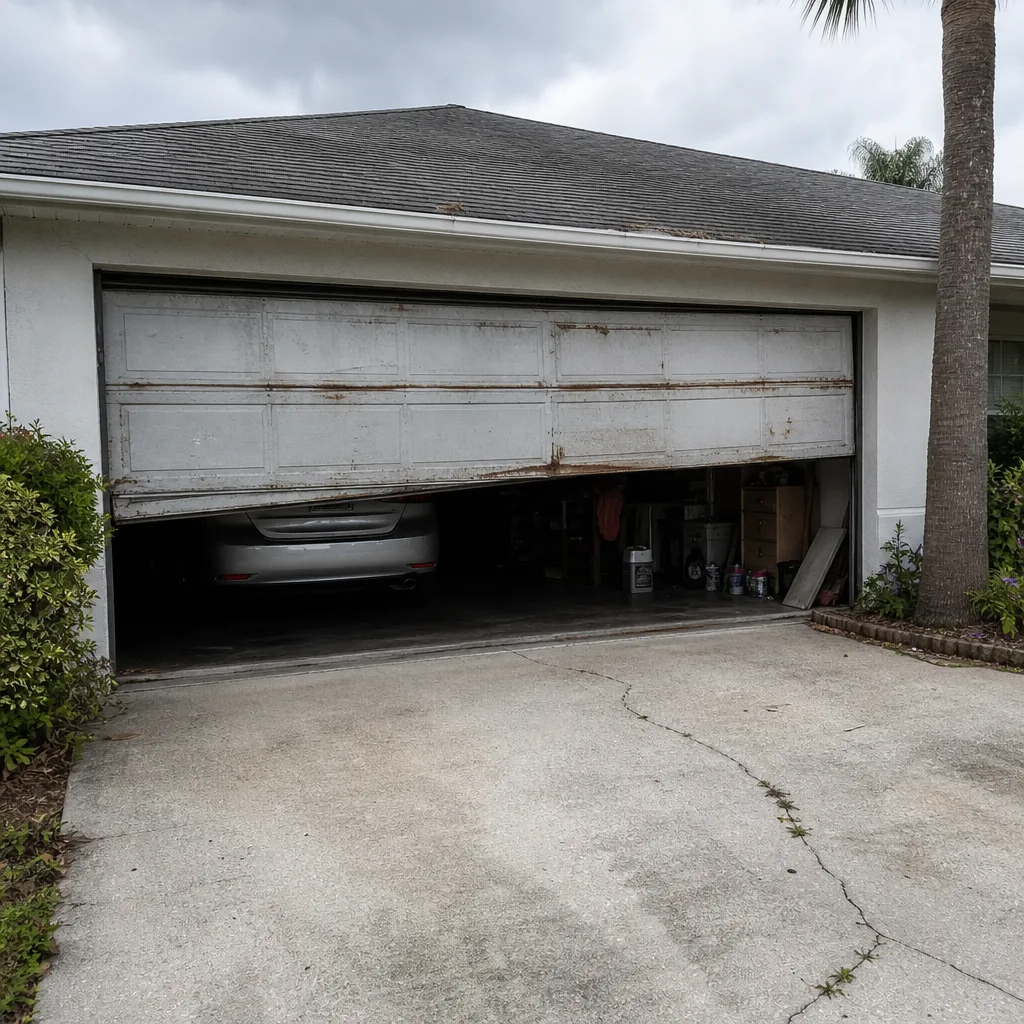 Before
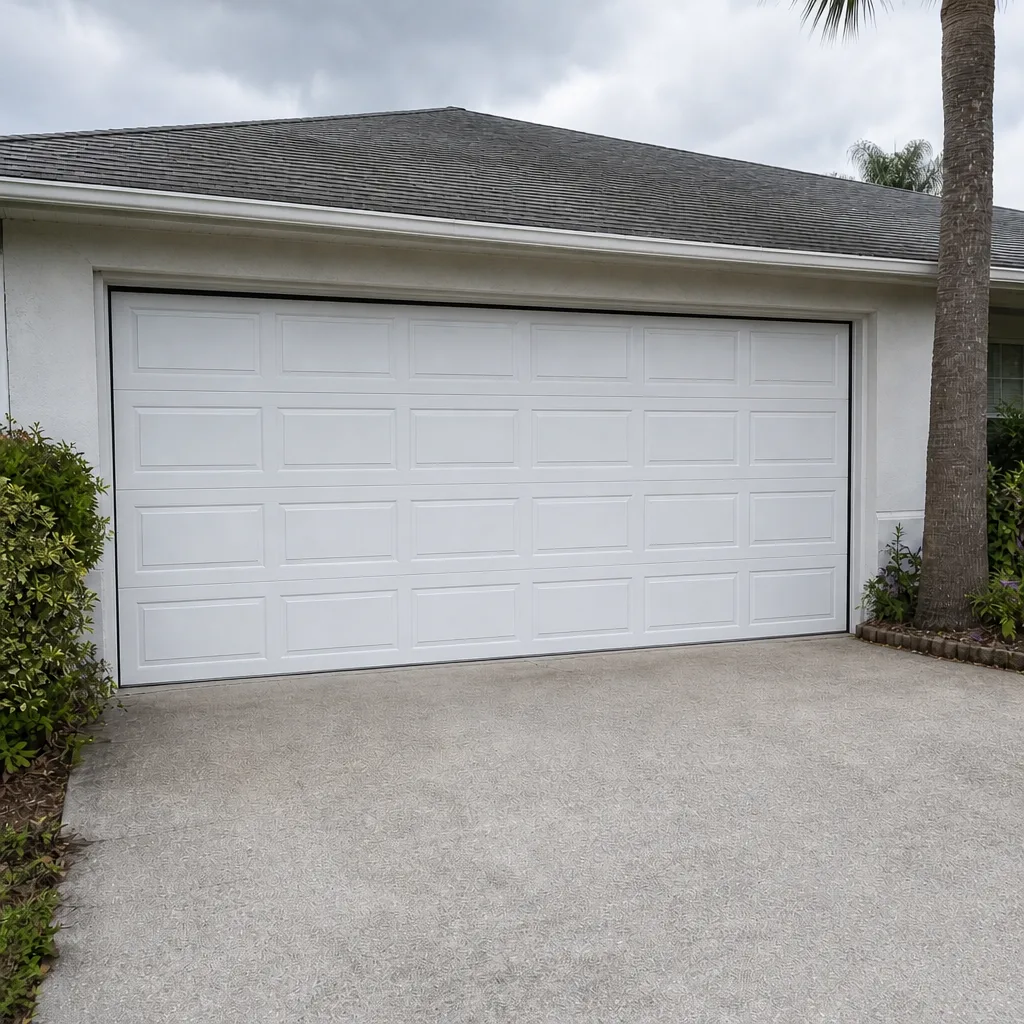 After
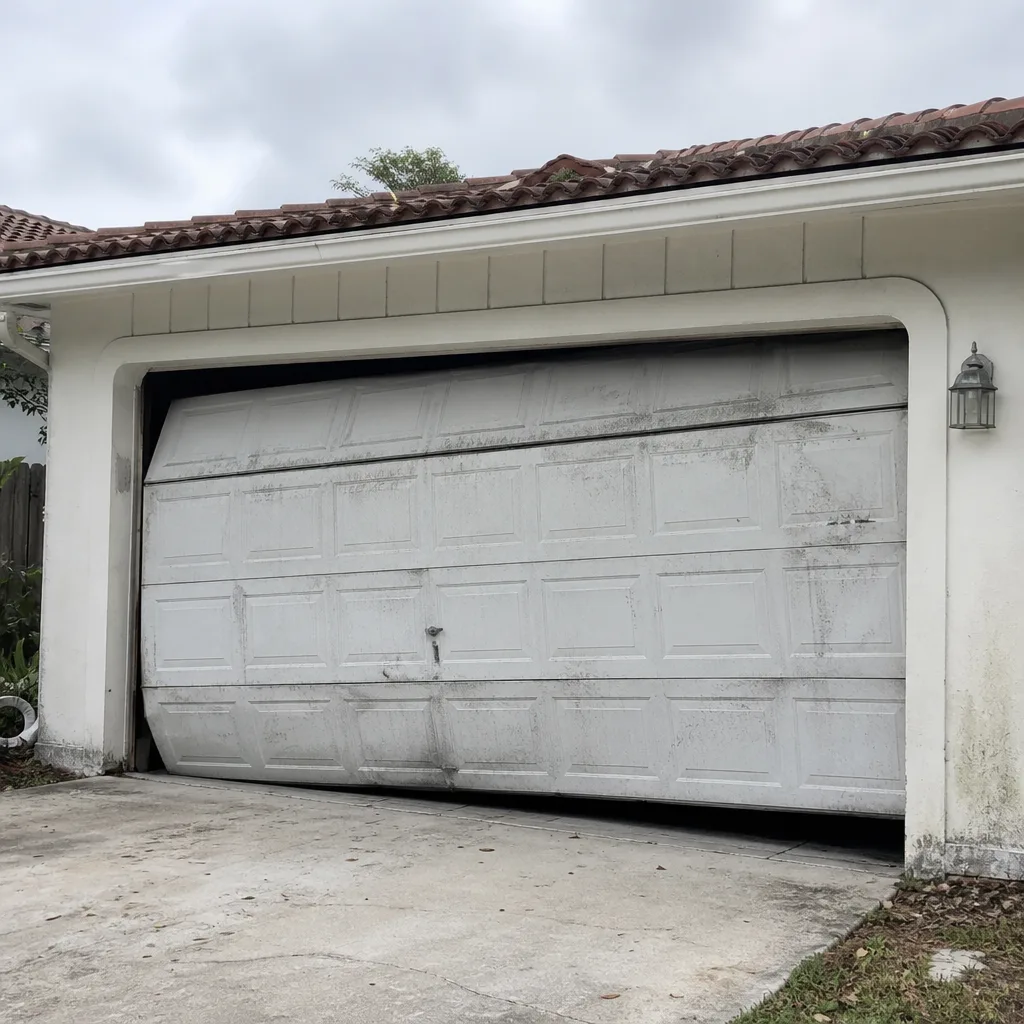 Before
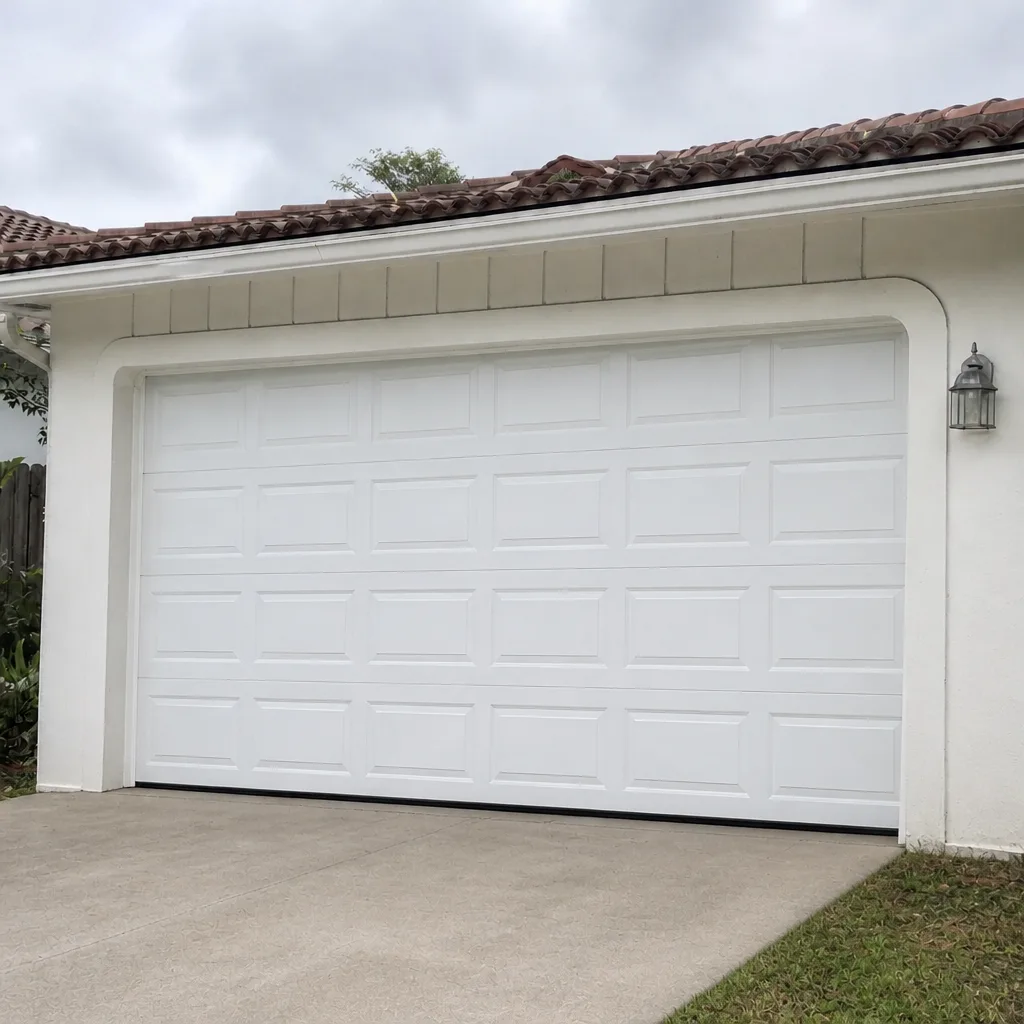 After
When to Call a Professional
Some tasks belong on your own checklist: wiping and lubricating moving parts, testing the auto-reverse function, checking weatherstripping, snugging loose bolts. The line gets crossed when the job involves energy stored in springs and cables, or when a symptom points to something more serious. Call a technician if the door feels heavy to lift by hand, if you hear a loud bang from the garage, if the door drifts down on its own when you release it halfway, if a cable looks frayed or slack, if the door jumps a track, or if the opener is straining and the force setting keeps needing to go up. Our technicians have up to 15 years of experience with LiftMaster, Chamberlain, Genie, Clopay, and the other major brands, and we handle emergency service for the failures that can’t wait. Palm Beach Gardens Garage Door Repair offers free estimates in Palm Beach Gardens. Call (855) 337-1107. We answer 24/7, and fast dispatch from 7am to 7pm runs Sunday through Friday.
Frequently Asked Questions
Every four to six months, not once a year. Heat above 90°F for extended periods thins lubricant and burns it off roughly twice as fast as in a cooler climate, so a Palm Beach Gardens door needs a shorter lubrication interval. Use a synthetic lubricant rated for high-temperature use, and skip the tracks. Call (855) 337-1107 if you’d like a technician to set up a routine.
Summer heat dries out the lubricant on the hinges, rollers, and spring, so metal starts rubbing on metal. A fresh application of heat-stable lubricant usually quiets it down within a few cycles. If the squeak comes back within a month, or if the door is also hard to lift, there may be a worn roller or a weak spring behind it. Call (855) 337-1107 for a free estimate.
Cable tension and mounting hardware. Check that both lift cables are taut with no fraying, and that every bolt and lag screw holding the tracks and brackets is snug. Then look at the bottom seal: a tight seal to the floor resists wind-driven rain. If you’re unsure what to look for, a technician can inspect the whole door in one visit. Call (855) 337-1107 to schedule a free estimate.
Yes, and you should, monthly. Lay a piece of 2×4 flat on the floor under the closing door. It should hit the board and reverse. Also pass a hand or box in front of the safety beam and confirm it reverses. If it doesn’t, the opener needs adjusting. Call (855) 337-1107, and we’ll sort it out.
Yes. A balanced door should feel light and stay put when you release it halfway. If it feels heavy by hand, the torsion spring has lost tension, which means the opener is doing work the spring should be doing. That strain wears out the opener faster and can lead to a spring failure. Call (855) 337-1107, and we’ll check the spring before it breaks.
We service LiftMaster, Chamberlain, Genie, Clopay, Amarr, Wayne Dalton, Craftsman, and Raynor, so there’s no referral runaround regardless of what’s installed on your door. That includes both legacy hardware and modern smart-home openers. Call (855) 337-1107 for a free estimate on repairs, opener work, spring replacement, or a new installation.
The Bottom Line
A garage door checklist for Palm Beach Gardens has to lead with lubrication, not bury it. Heat burns off grease faster here than anywhere with a real winter, so a yearly schedule is already behind by the time summer arrives. Follow the order that matches the climate: lubricate every four to six months with a heat-stable product, inspect weatherstripping every six months for UV damage, run the auto-reverse test monthly to catch spring wear early, and tighten and inspect the hardware before each hurricane season. Corrosion checks on the bottom brackets and torsion rod ends take ten minutes and prevent bigger repairs later. Do the safe tasks yourself. Call a professional for springs, cables, and anything involving the opener’s force settings. Your garage door does real work here, and a Palm Beach Gardens maintenance routine that matches the climate keeps it doing that work without surprises.
For a routine inspection, a stubborn repair, or an emergency that can’t wait, call Palm Beach Gardens Garage Door Repair at (855) 337-1107. We answer 24/7. Fast dispatch from 7am to 7pm, Sunday through Friday. Estimates are free, the price is quoted and agreed before any work starts, and we work on your brand. Palm Beach Gardens Garage Door Repair covers repairs, opener work, springs, and new installations across LiftMaster, Chamberlain, Genie, Clopay, and the other major brands.
Written by the team at Palm Beach Gardens Garage Door Repair.