
Last updated November 21, 2026
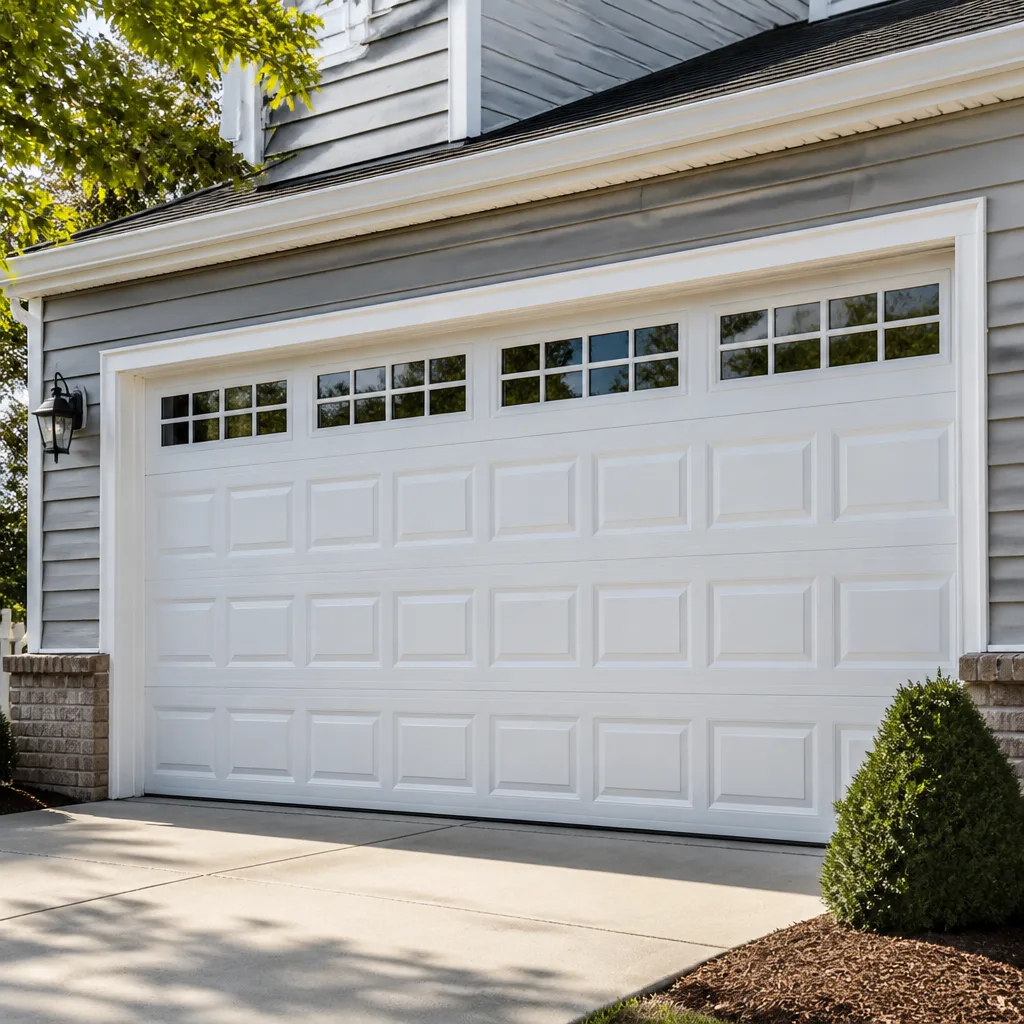 Raised-panel steel
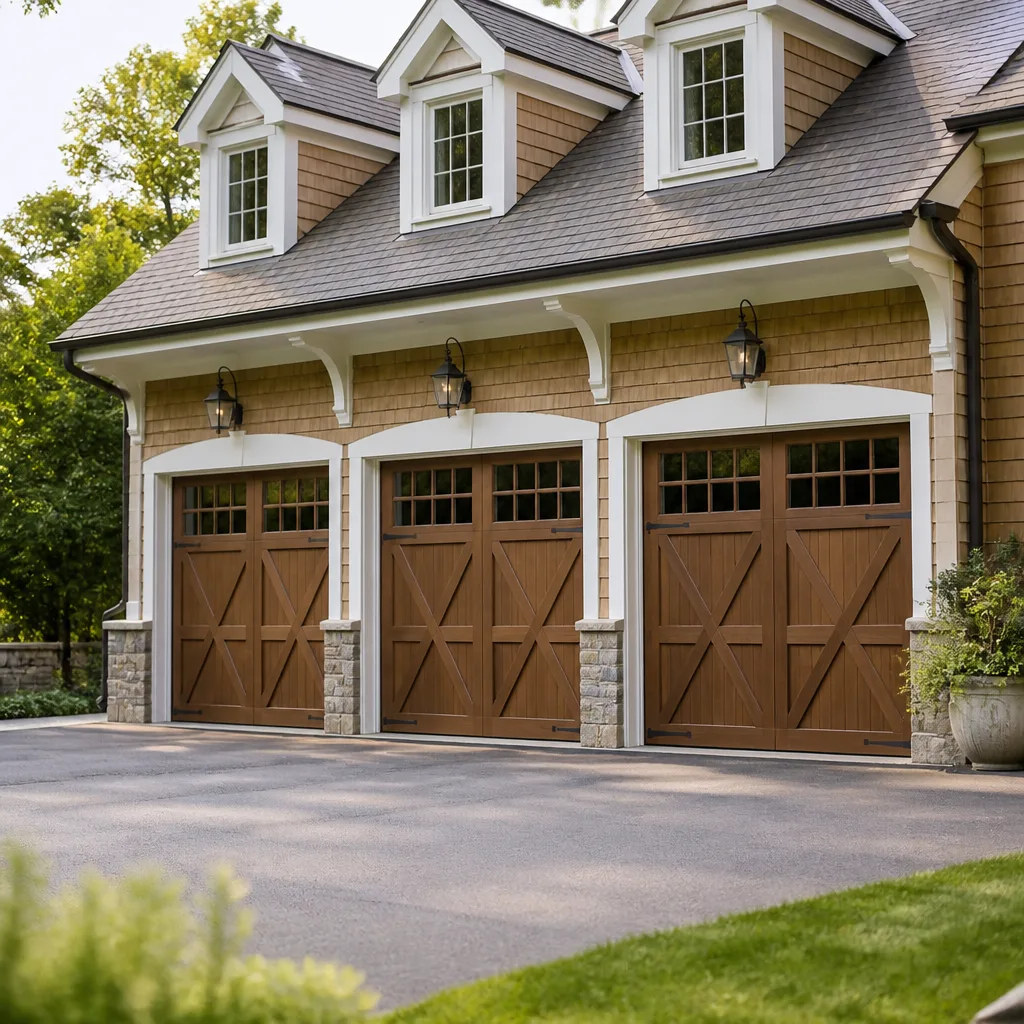 Carriage house
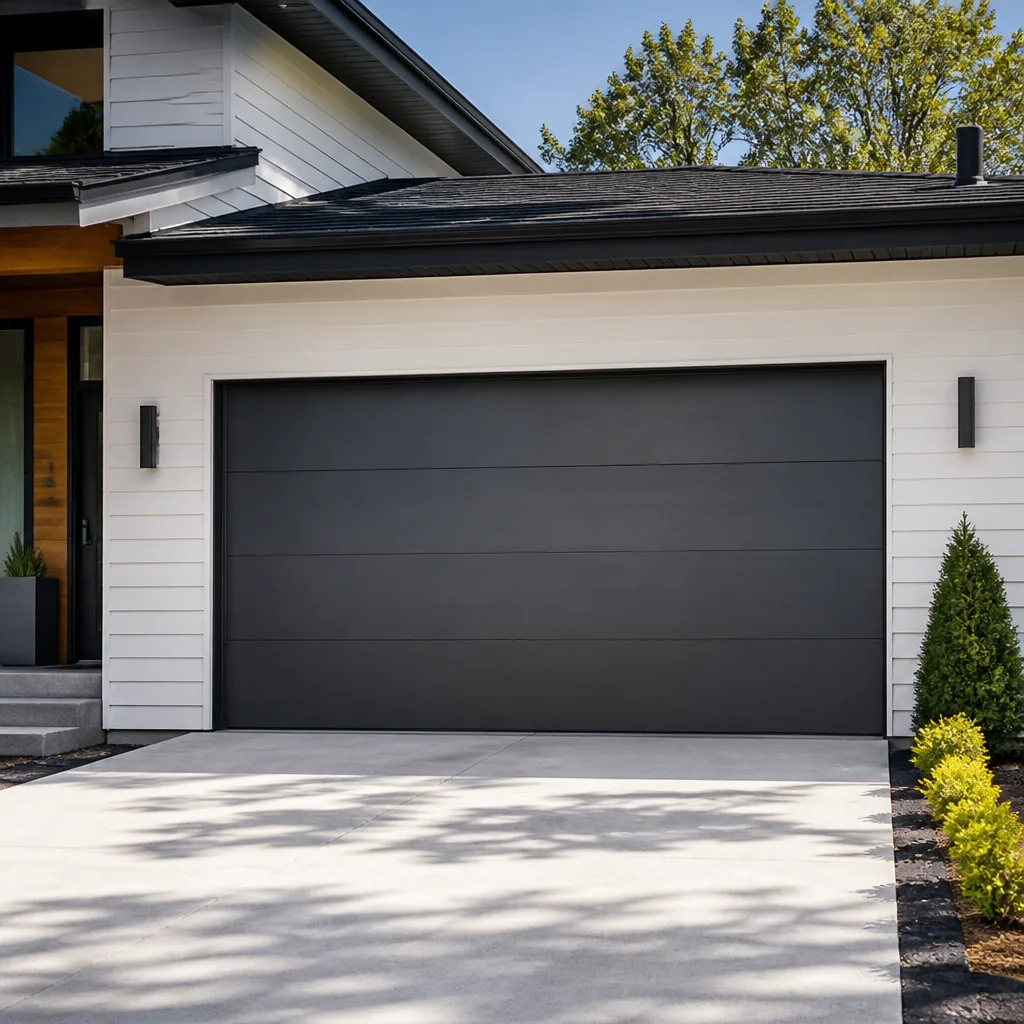 Modern flush
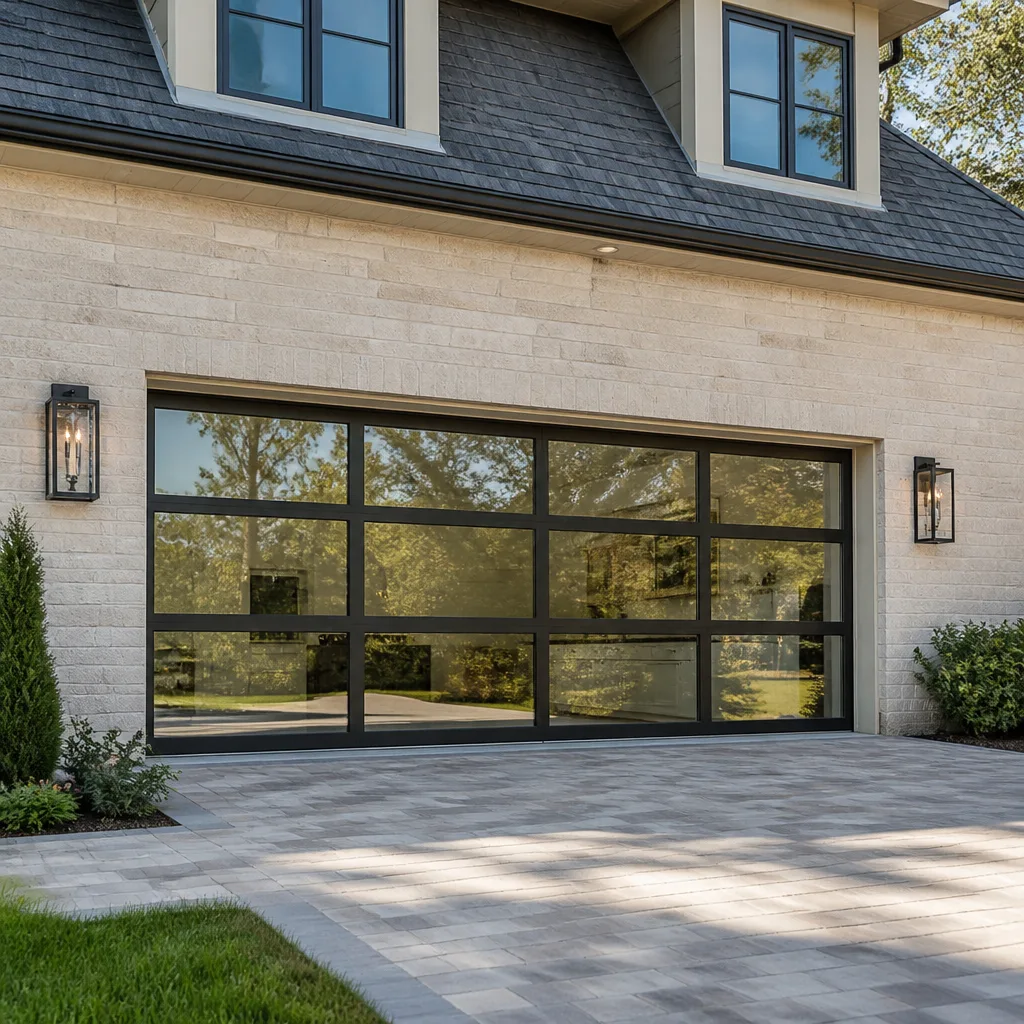 Full-view glass
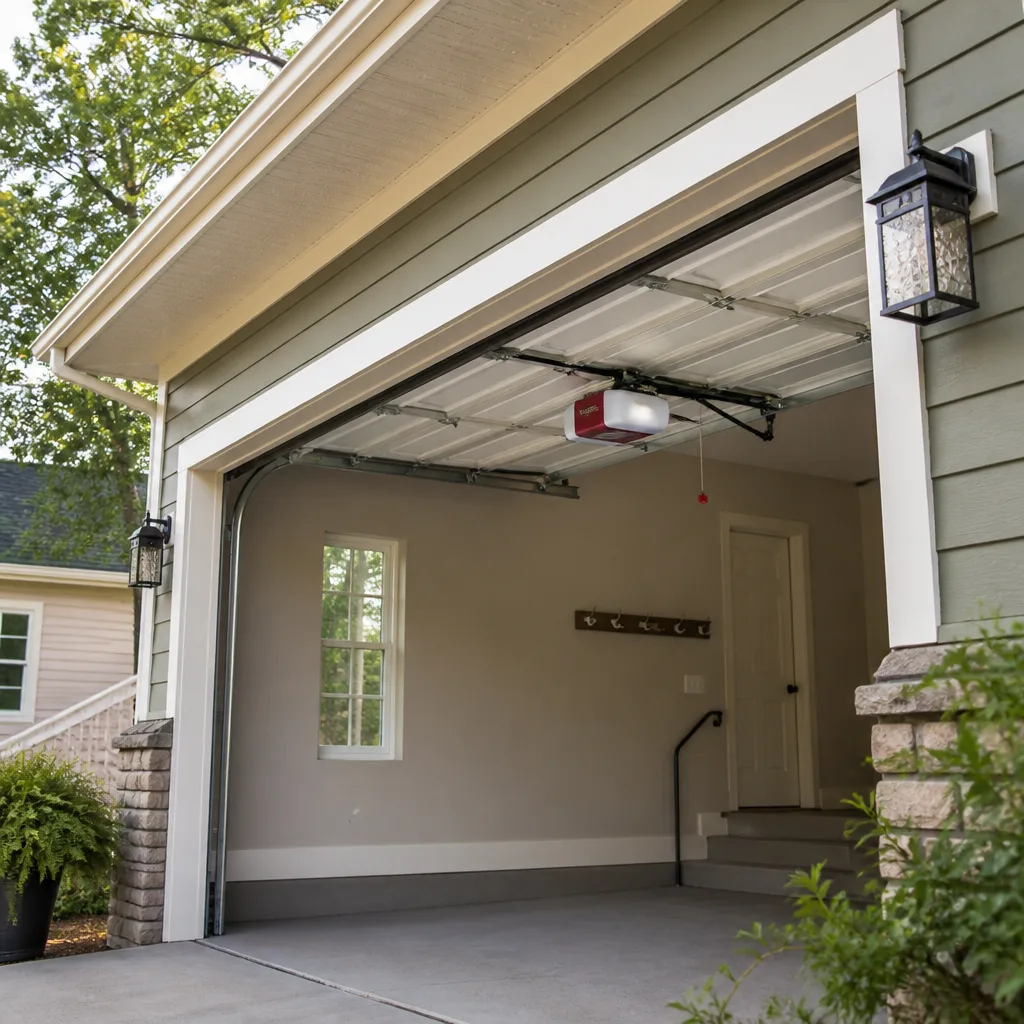 LiftMaster openers
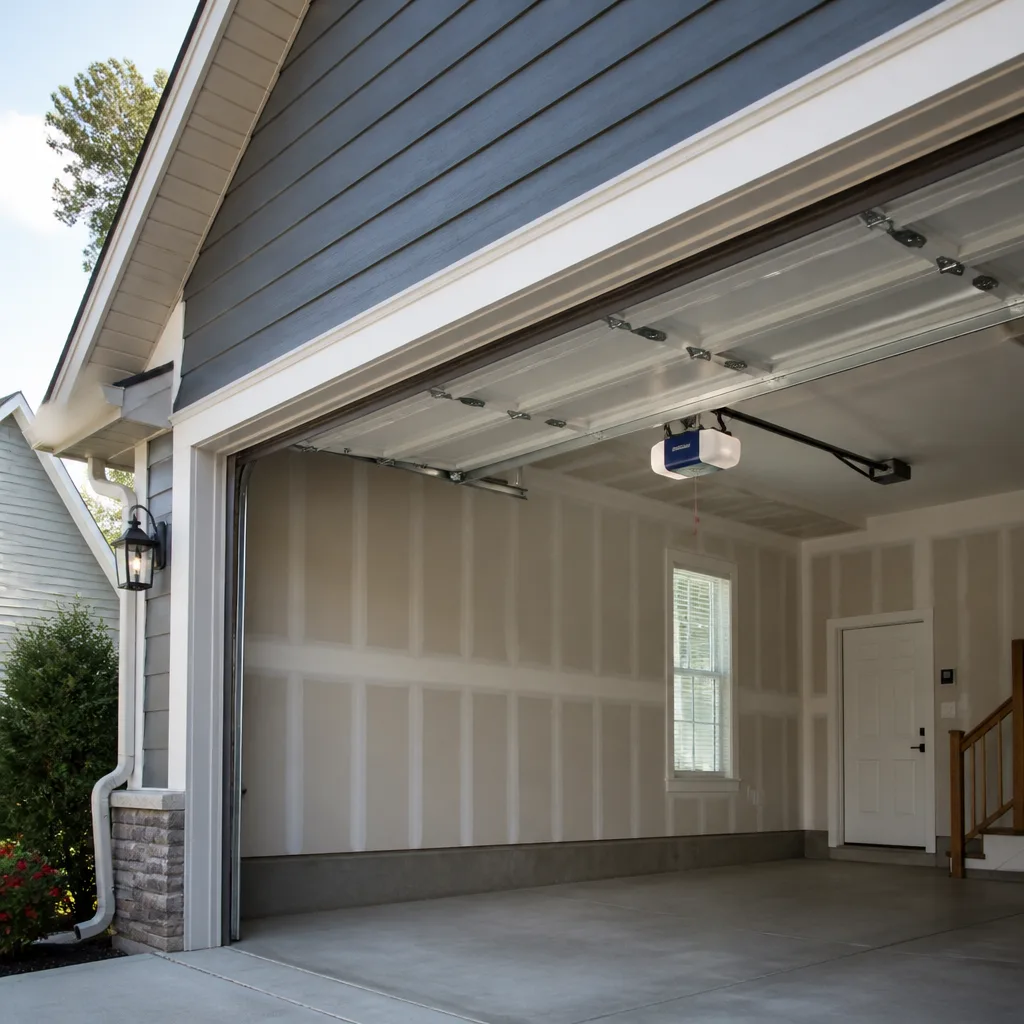 Chamberlain openers
Full 25-point door and opener safety check with every visit - springs, cables, rollers, tracks, and your LiftMaster or Chamberlain opener included
You get a price before we start. It does not change when the pro arrives.
Get your free estimateSeasonal Garage Door Care for Palm Beach Gardens: Year-Round Homeowner’s Guide
Most homeowners here think seasonal garage door care means the same thing it did where they grew up: rake the leaves, check the weatherstripping, wait for spring. That guidance belongs somewhere with four real seasons and a hard winter. Palm Beach Gardens runs on a different rhythm. Our year splits into two mechanical stress periods – hurricane season and peak summer heat – and a garage door that gets no attention in either one tends to fail in the exact month you need it. This guide walks through what actually wears out, when to check it, and how to prepare, month by month, for the way Palm Beach Gardens weather treats the largest moving object in your home.
Quick Answer
Seasonal garage door care in Palm Beach Gardens comes down to two checkpoints: a pre-hurricane-season inspection in May that covers the door’s track, hinges, rollers, and wind rating before storm months arrive, and a summer heat plan that keeps the opener from overheating in a garage that can sit well above outside temperatures. Everything else, from dry-season spring tension to snowbird prep, hangs off those two anchors. If you only remember two dates, remember May and June.
Styles & brands we work with
- Raised-panel steel
- Carriage house
- Modern flush
- Full-view glass
- LiftMaster openers
- Chamberlain openers
Table of Contents
- Why Palm Beach Gardens Runs on Two Stress Periods, Not Four Seasons
- The May Pre-Hurricane Checklist: What to Test and What to Upgrade
- Summer Heat Management: Openers, Cutoffs, and Ventilation
- Dry Season (November to April): Why Doors Get Stiff
- Post-Storm Inspection: Damage You Only See When the Door Moves
- Snowbird Prep: Protecting Hardware During Months of Non-Use
- The Twelve-Month Care Calendar at a Glance
- Common Mistakes to Avoid
Why Palm Beach Gardens Runs on Two Stress Periods, Not Four Seasons
Garage doors don’t fail evenly through the year. They fail at the edges of the two periods that stress metal, rubber and electronics hardest. In Palm Beach Gardens, those periods land in the same order every year and can be planned for.
The first is hurricane season, which runs from June 1 through the end of November. That’s not a marketing worry – the state of Florida requires new residential garage doors in wind-borne debris regions to carry a wind rating, and a door installed before those requirements may not meet today’s standard. The second is peak summer heat. Inside a closed garage, especially one facing west or sitting without an exhaust fan, temperatures routinely climb far above the outdoor reading, and that heat cooks the two parts most likely to strand you: the opener and the rollers.
What separates June in Palm Beach Gardens from June in Georgia is the double stack. The heat arrives at the same time as the storms. So a door that’s already marginal – a couple of stiff rollers, a worn bottom seal, a spring running near the end of its cycle – is asked to perform its hardest work in its worst condition during the month with the most weather risk. Most of what we see in a busy summer is that overlap catching a homeowner off guard.
Run the calendar this way and the whole year makes sense:
- May: prepare for storms and heat before either arrives.
- June through November: watch, listen, and deal with heat symptoms quickly.
- November through April: the milder dry stretch, when cooler air tightens components and exposes anything left loose.
- Any time the house sits empty: protect hardware from humidity and lack of movement, not just heat.
This is a guide about the equipment, not a forecast. But if you treat the year as a two-checkpoint cycle rather than a four-season cycle, you’ll stay ahead of most of the failures we get called for in Palm Beach Gardens.
The May Pre-Hurricane Checklist: What to Test and What to Upgrade
May is the month to make sure the door that protects your house through hurricane season is mechanically ready for it. Every item on this list can be checked in an afternoon, and none of them require you to touch the springs or adjust anything tension-related yourself.
Start with the door in motion. A garage door that hesitates, binds, or runs noisily in May will only get worse once the heat rises. Here’s the checklist we walk a Palm Beach Gardens homeowner through:
- Watch the full travel. Open and close the door and watch the whole path. Any grinding, jerking, or shudder signals a roller, track or hinge issue that gets worse under load.
- Check the track for misalignment. Run a hand along each vertical and horizontal track. They should feel smooth and stay parallel. A track bent by a bump – or loosened by a past storm – needs attention before it becomes a rod that jumps the rail.
- Look at the bottom seal. The weather seal under the door is the first line against wind-driven rain. A cracked or hardened seal lets water run in and can let wind lift the door edge.
- Test the opener’s force and safety functions. The opener should reverse when it meets something in its path. Use the manufacturer’s test procedure for your model.
- Confirm the door’s wind rating. If your door was installed before current requirements, ask us to check its rating label. Some doors qualify for wind-retrofit reinforcement brackets; others warrant a full replacement. When storm-season demand peaks, scheduling a new door takes longer, so May is the practical time to start that conversation.
- Consider a backup power source for the opener. A dead opener after a storm knocks out power means a door you can’t operate. A battery backup is a straightforward addition.
On the upgrade question: a wind-rated door installed now is the plan. What we won’t do is tell you a specific dollar figure over the phone for a new door. Fit, material, window configuration and brand – whether it’s a Clopay, Amarr, Wayne Dalton or Raynor door – all change the number. We measure, quote it in writing, and you decide before a single panel comes off. If you’d rather start with repair than replacement, our garage door repair service covers everything from track realignment to hinge replacement, and we can tell you in a single visit whether the door you have is worth reinforcing or replacing. Call (855) 337-1107 to set up that pre-season look.
Summer Heat Management: Openers, Cutoffs, and Ventilation
When a garage door opener stops working on an August afternoon in Palm Beach Gardens, the cause is often thermal, not electrical. Openers have a thermal cutoff built in to protect the motor, and in a garage that traps heat, that cutoff can trip during normal use. The motor is doing what it was designed to do; the garage is the problem.
What the cutoff looks like: the door stops partway, the opener goes quiet, and it may not respond to the remote for a stretch. If the door works fine again once the space cools, that’s the signature. It’s not a sign the opener is failing, but it is a sign the heat is winning, and repeated trips stress the electronics that control it.
How to reduce heat load on the hardware:
- Let the garage breathe. Open the garage door to the porch for the hottest hour of the day when you’re home. A small exhaust fan mounted to vent outside helps too. Air movement alone can pull a garage out of the danger zone.
- Watch the lubrication. Extreme heat causes standard grease to thin and migrate off rollers and hinges, accelerating wear. Keep rollers, hinges and the opener rail properly lubricated with a product rated for high temperatures – but that’s maintenance, not a fix for a failing part.
- Shade the west-facing wall. A garage on the west side of a house absorbs the hottest part of the day. Window coverings or shade on that wall lower the load inside.
- Check for drafts under a closed door. A worn bottom seal lets cool air escape and hot air in. Replacing it is a small job with a real effect on garage temperature.
If your opener is cutting out repeatedly, don’t keep pressing the remote and hoping. The electronics can fail under that kind of thermal cycling. We repair openers across LiftMaster, Chamberlain, Genie and Craftsman units, and if it’s a modern smart-home model we can tell you whether it’s a sensor fault, a logic board issue, or simply a unit pushed past its limit by heat. Learn more about that work on our garage door opener repair page, or call us and we’ll diagnose it in a single visit.
Dry Season (November to April): Why Doors Get Stiff
Here’s the counterintuitive part of the Palm Beach Gardens year: the cooler months are when a door that ran smoothly all summer starts to feel stiff. Nothing broke. The metal responded to temperature the way it always does, and the consequences show up at 7am in December when the door sounds heavier than it did in August.
Two things are happening. First, metal contracts slightly as it cools, and a torsion spring’s tension changes with it. A door balanced during the summer may sit differently when the air is cooler. Second, all the friction points that ran loose in the heat – rollers that had thinned grease, hinges that had loosened a touch – now feel tighter, and the door needs more force to move. A well-adjusted door handles this quietly. A marginal one lets you hear the difference.
What to do during the dry stretch:
- Re-test the balance. With the opener disconnected, raise the door halfway by hand. It should stay there. If it sinks or rises on its own, the springs are out of balance.
- Listen before you look. Squeaks and groans in cool weather usually point to dry rollers or hinges. A quick lubrication pass handles most of them.
- Check the safety reverse again. Cooler weather stiffens the door and can reveal a reverse sensor that’s just barely passing in summer but fails when the rubber on the bottom seal is less pliable.
- Watch for unusual stiffness at the very start of the travel. If the first foot feels heavy and the rest doesn’t, that’s a spring or roller symptom worth having checked.
- Use the mild season for proactive work. November through April is a genuinely good window to schedule adjustments and maintenance, because you’re not competing with storm-season demand for a technician’s calendar.
If a dry-season check turns up a spring that’s lost its balance, take it seriously but don’t take it on yourself. Springs are under high tension and are the single most dangerous part of the system to handle without proper training and tools. Our garage door spring repair team handles that work with the right tools and the right diagnosis, and we’ll tell you plainly whether it’s a spring, a roller, or an adjustment. When it can’t wait, we offer emergency garage door service for situations like a spring failure that leaves the door unusable.
Post-Storm Inspection: Damage You Only See When the Door Moves
After a tropical storm or hurricane passes through Palm Beach Gardens, the damage that matters often isn’t visible from the driveway. A door can look fine standing closed and reveal the problem only when you first operate it. That’s the inspection most homeowners skip, and it’s the one that matters.
Here’s what to look for in the days after a storm, in order:
- Check the track alignment first, before running the opener. Storm winds and flying debris bend tracks more often than they break a door. If a track is bent, running the opener risks jumping the door off the rail and causing worse damage. Look down the length of each track from the edge of the door and check that they run parallel.
- Look for panel damage. Dents, cracks or separated seams in a door panel can weaken the whole assembly. A single damaged panel on a sectional door may be replaceable on its own; a door with structural damage to the rails or stiles usually isn’t.
- Test the door by hand before the opener. Disconnect the opener and move the door manually a foot or so. Any binding, scraping or unusual resistance is a sign the storm moved something.
- Check the bottom seal and perimeter for water intrusion. A seal that let water in during the storm may now be loose and needs replacing before the next rain.
- Confirm the safety sensors are aligned and clear. Debris blown across the sensor path or a nudge to the brackets can stop the door from closing even when the door itself is fine.
- Listen for new sounds. A door that ran quietly before the storm and now grinds or groans needs a technician’s look before you run it again.
If anything on that list turns up, don’t keep cycling the door hoping it settles. Storm damage to a track, panel or header is a structural issue, and running a misaligned door is how a manageable repair becomes a full replacement. Hail is uncommon in Palm Beach Gardens, so most storm damage here comes from wind, flying debris and water intrusion rather than impact from above. Call (855) 337-1107. We answer 24/7, and we can get a technician out to assess storm damage before it worsens.
Snowbird Prep: Protecting Hardware During Months of Non-Use
If you leave Palm Beach Gardens for the summer – which many homeowners do – the garage becomes the piece of equipment most likely to fail quietly while you’re gone. Months of non-use in high summer humidity is a specific kind of stress: lubricant dries out, seals harden, and the first time you open the door at the start of the season, everything moves in the worst possible condition.
Here’s the sequence we recommend before you lock up for an extended absence:
- Run the door and listen one last time. Fix anything that’s already marginal before you leave, not after you return. A grinding roller that would take ten minutes to address now becomes a stuck door in November.
- Lubricate the moving parts. Rollers, hinges and the opener rail. This is the single highest-value thing you can do for hardware that will sit idle for months in humid air.
- Inspect and treat the bottom seal. Humidity hardens rubber. A seal that’s already cracking is the first thing to let water in when the rains return.
- Confirm the opener is on a surge protector, or that its internal protection is intact. A summer storm passing through while you’re gone is a real risk to the opener’s electronics.
- Set the door fully closed and latched, not left open. An open door during storm season is a target for wind and water.
- Ask someone to run the door once a month if possible. A door that moves periodically keeps its lubricant distributed and exposes any developing problem before it becomes a stuck door.
If you’d rather not leave it to chance, schedule a technician visit before you go. We can check the whole system, adjust what needs adjusting, and set the door up for a long, uneventful absence. New to the area and not sure where to start? Our Palm Beach Gardens Garage Door Repair home page is a good place to see the whole picture of what we handle for local homeowners.
The Twelve-Month Care Calendar at a Glance
Here’s the whole year on one page. This isn’t a rigid schedule – it’s a rhythm. Use it to know roughly what to check and when.
- January to April (mild and dry): balance test, lubrication pass, safety-reverse check. The best window for scheduled maintenance and proactive upgrades.
- May (pre-hurricane): full system check, track alignment, bottom seal inspection, wind-rating confirmation, backup power check. Start any installation conversation now.
- June (hurricane season opens): expect heat-related symptoms to begin. Watch for opener cutoffs and stiffening rollers.
- July and August (peak heat): ventilation top of mind. Lubrication checked more often. Any opener thermal cutoff treated as a signal, not an inconvenience.
- September and October (active storm months): post-storm inspection after any significant system passes, especially the day before you next operate the door.
- November (dry season begins): balance re-check, listen for stiffness, cycle the whole system back into a routine.
- December through April (snowbird season): pre-departure prep for anyone leaving, dry-season lubrication for anyone staying.
Our technicians have up to 15 years of experience across the brands most common in Palm Beach Gardens homes, and the seasonal call patterns here are predictable. Most of what fails in June or December was visible in May or November. That’s the whole point of a calendar: it moves the problem into a month when it’s still an easy fix.
Common Mistakes to Avoid
- Waiting until the door breaks to look at it. In Palm Beach Gardens, that usually means the failure lands during hurricane season or peak heat, when you need the door most. A quick check in May costs far less than a June failure.
- Ignoring the opener’s thermal cutoff as “just the heat.” A cutoff isn’t the door being dramatic. It’s a warning that repeated electronics stress is building. Treat it as a signal worth investigating.
- Lubricating the door once a year and thinking it’s covered. In this climate, grease dries out and thins faster than in cooler parts of the country. More frequent checks in summer are warranted here.
- Running a door with a bent track after a storm. This is the most expensive mistake on the list. A bent track can jump a door off the rail and turn a repair into a replacement. Check alignment before touching the opener.
- Assuming a door that worked all summer will work all winter. Cooler temperatures change spring tension. A door that’s stiff in December isn’t exaggerating – it’s telling you the balance shifted.
- Leaving for the summer without prepping the door. Months of humidity without movement is exactly the condition that lets a seal harden and a roller seize. Do the prep before you go.
- Trusting an unfamiliar brand to just any repair. If your door is a Wayne Dalton or a Raynor, an installer who only sees one brand will often recommend replacement when a repair would do. That’s why we work across all the common brands and diagnose the door you actually have.
See the difference
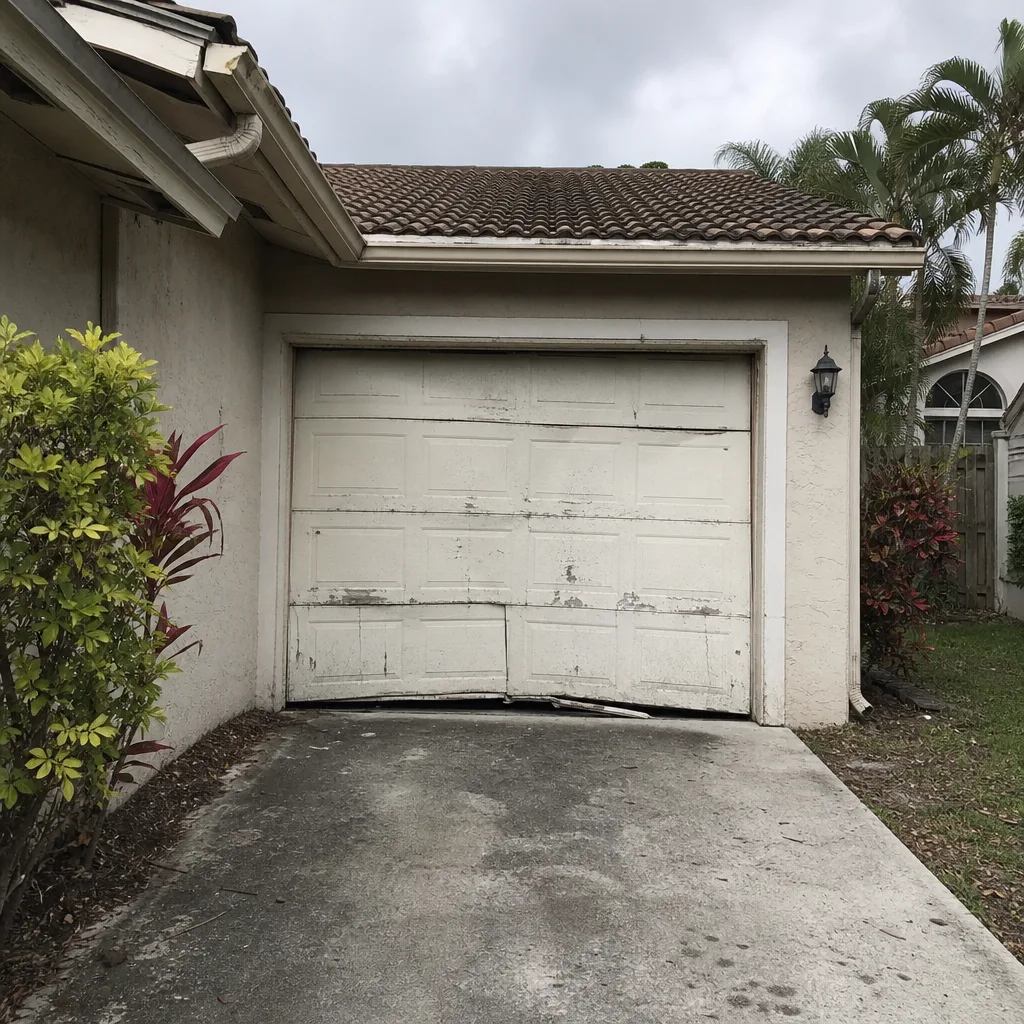 Before
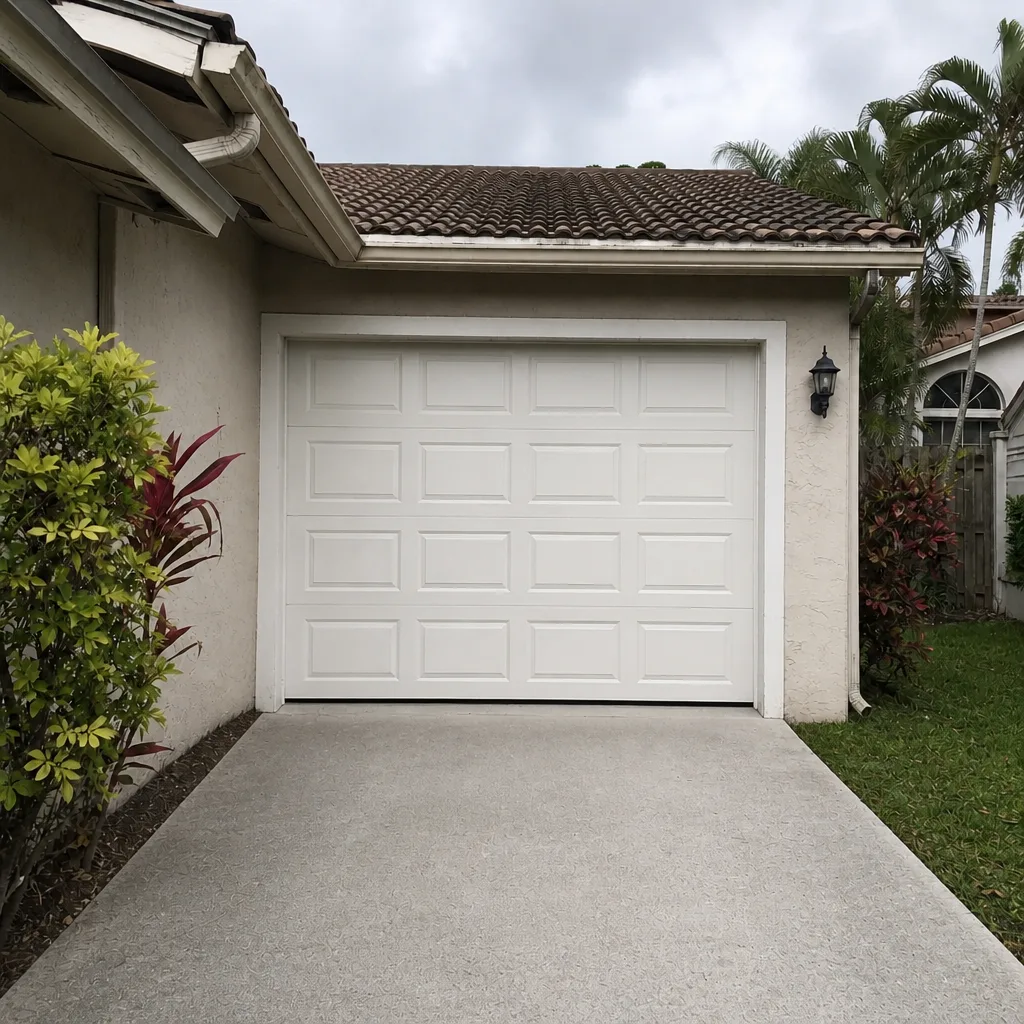 After
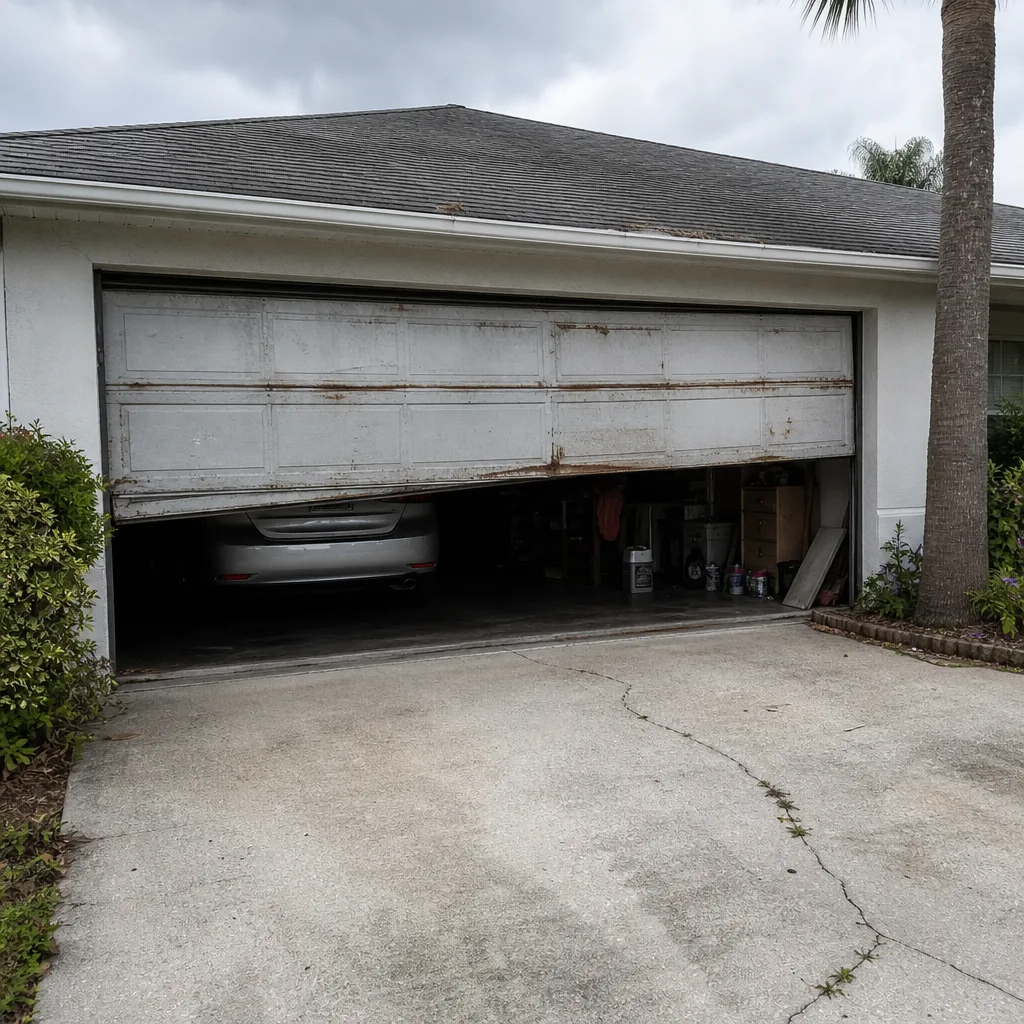 Before
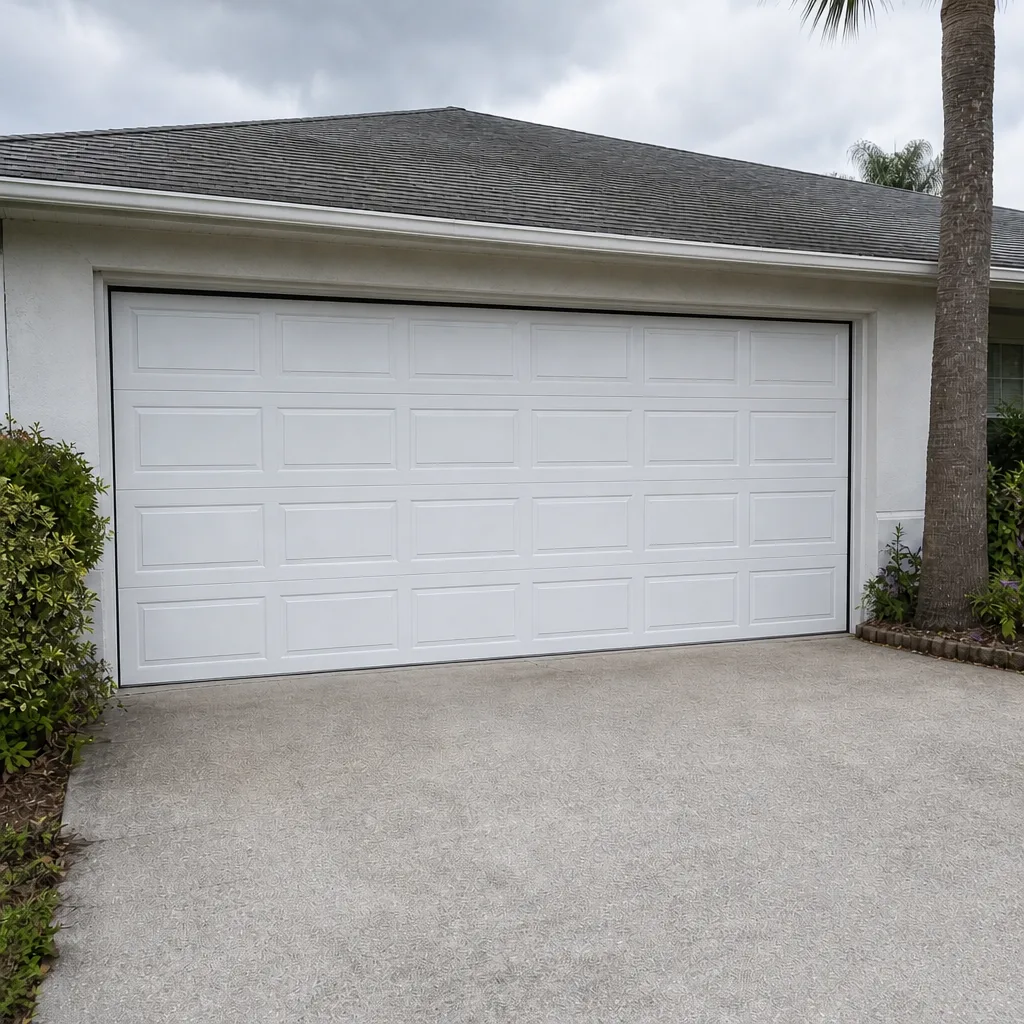 After
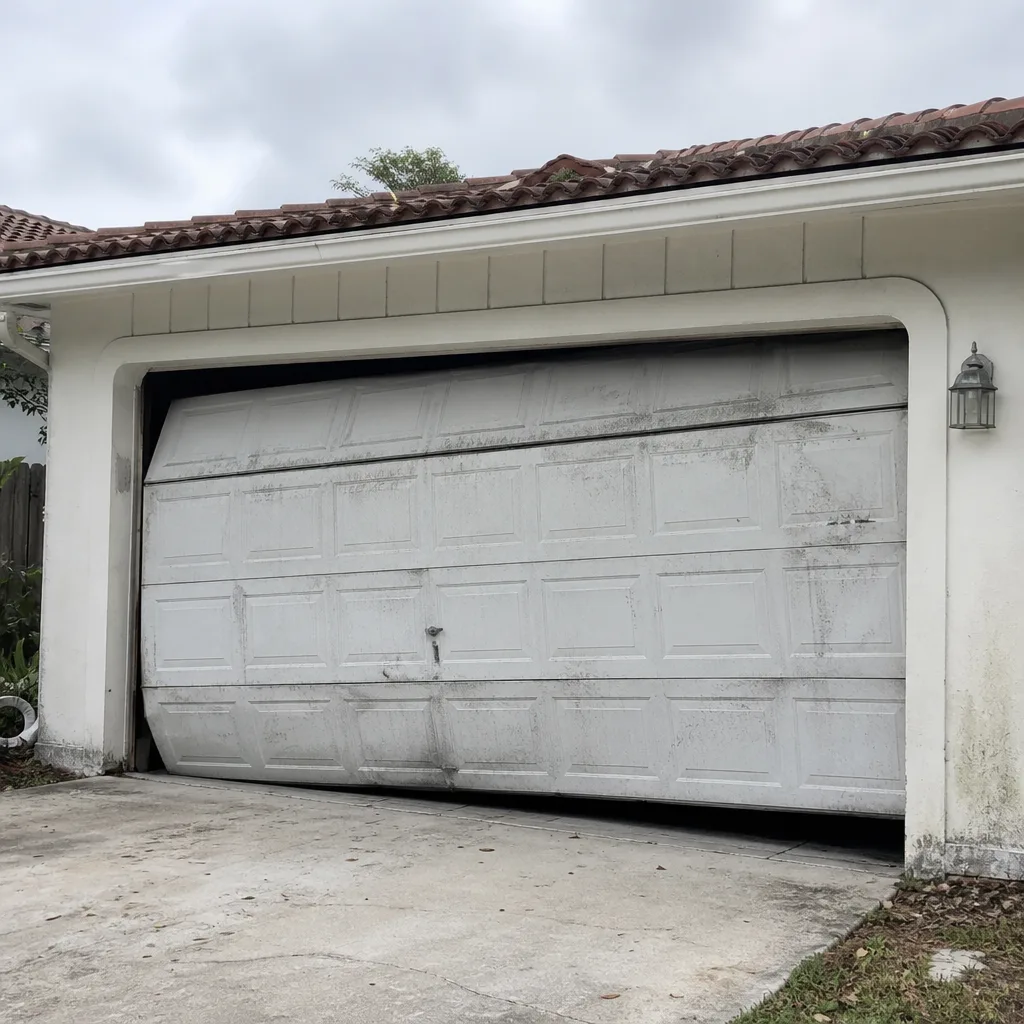 Before
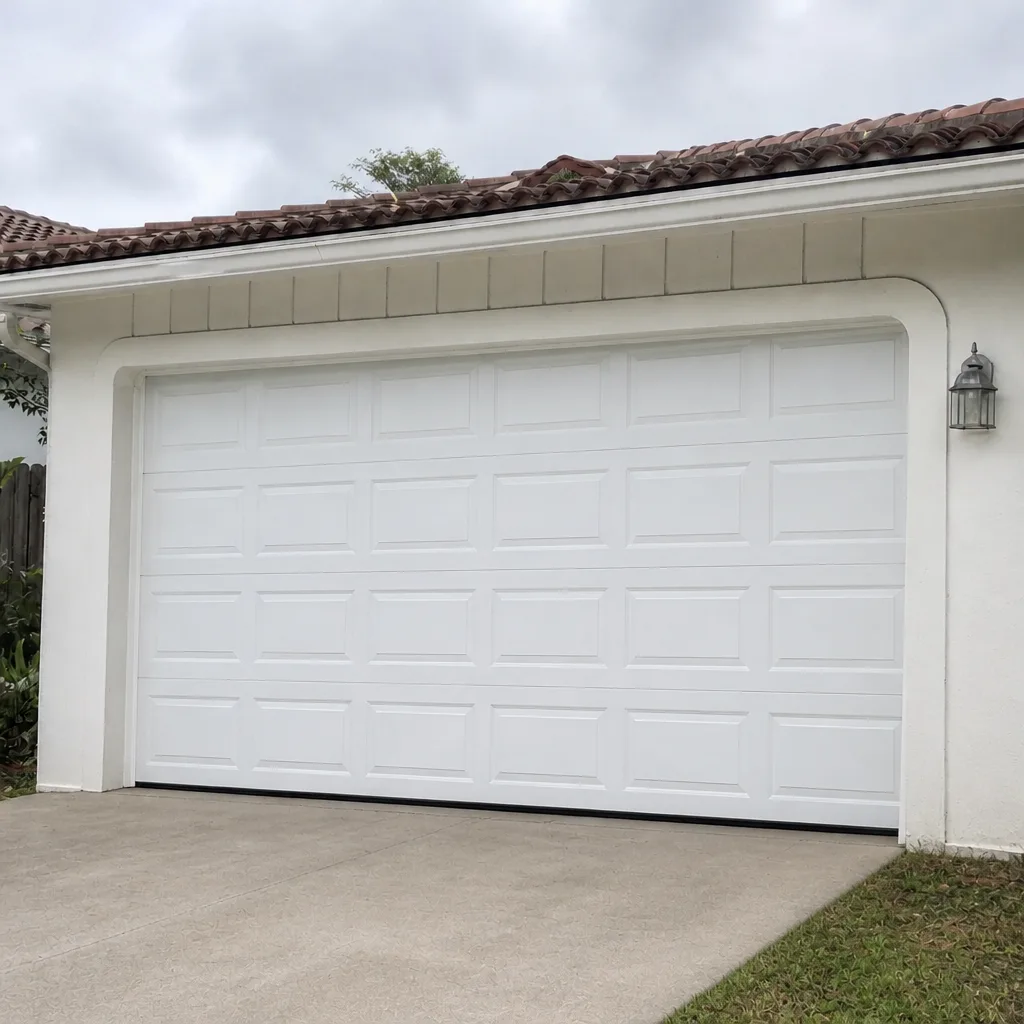 After
When to Call a Professional
Some of what’s in this guide is a homeowner’s work: lubrication, running the door and listening, testing the safety reverse, checking seals. The rest is not. Call us when a spring has lost tension or snapped, when a track is visibly bent, when the opener cuts out repeatedly in the heat, or when a post-storm inspection turns up anything that isn’t cosmetic. Springs are under high tension and require proper tools and training; a failed opener may be a board issue that requires brand-specific diagnosis. Palm Beach Gardens Garage Door Repair offers free estimates in Palm Beach Gardens – call (855) 337-1107. We answer 24/7. Fast dispatch, 7am to 7pm, Sunday through Friday.
Frequently Asked Questions
Twice a year is a sensible baseline here: once in May before hurricane season and heat arrive, and once in November as the dry season begins. Those two checkpoints catch most of what goes wrong before it becomes a failure. If your door is older or you’ve had a prior adjustment issue, a third visit in mid-summer is worth considering. Call (855) 337-1107 and we’ll set a schedule that fits your door.
Your opener has a thermal cutoff that turns the motor off when it gets too hot. In a Palm Beach Gardens garage during peak summer, the space can get far hotter than the outdoor temperature, and normal use can trip that cutoff. If it happens repeatedly, the opener is being stressed beyond what it’s designed for. Call (855) 337-1107 for a diagnosis – a repair or an airflow fix may solve it.
Not necessarily – cooler temperatures change a torsion spring’s tension and tighten up friction points that ran loose in the heat. A door that’s stiff in the dry season is responding to the temperature. The one thing you shouldn’t do is assume it will adjust itself. If the stiffness is pronounced or the door won’t stay level when opened halfway, call us for a balance check.
Check the track alignment before you run the opener: a bent track risks a door jumping the rail. Then look for panel damage, test the door by hand, check the bottom seal, and confirm the safety sensors are clear. Any binding or grinding after a storm is worth a call. Hail is uncommon here, so wind, debris and water intrusion are the usual culprits.
Lubricate the moving parts, inspect the bottom seal, set the door fully closed, and have someone run the door once a month if possible. The bigger risk for a long-empty Palm Beach Gardens garage is humidity and non-use, not heat alone. Schedule a prep visit before you leave and the door is far less likely to give you trouble on your return.
We service LiftMaster, Chamberlain, Genie, Clopay, Amarr, Wayne Dalton, Craftsman and Raynor systems – eight of the most common brands on the market. That covers modern smart-home openers and older legacy hardware alike. If your door or opener is one of those, we can diagnose and repair it without referring you elsewhere. Call (855) 337-1107 for a free estimate.
The Bottom Line
Seasonal garage door care in Palm Beach Gardens isn’t a four-season project. It’s a two-checkpoint one. Prepare in May for hurricane season and heat, prepare again in November for the cooler dry stretch, and keep watch through the summer for thermal cutoffs and heat-stressed rollers. A door that gets those two checkpoints and a little attention when something starts to sound different will serve you through the worst of the weather. If you’d rather not manage the calendar yourself, we handle the diagnosis, the repair, and the installation, on the door and opener you actually own. Call (855) 337-1107 for a free estimate – the price is quoted and agreed in writing before any work starts, and the answer you get in the garage is the answer you’ll see on the invoice.
Written by the team at Palm Beach Gardens Garage Door Repair.